Watch me on Twitch!

Streaming on Twitch whenever I can. (Subscribe to my channel to get notifications!)

June 26, 2017

An Episode In Gaming: Sonic Boom (Part 2)

Part 1 – Part 2 – Part 3 – Part 4

In Part 1, I spent a lot of time discussing the characters – now we’re jumping into the story of the show! Or, well, at least Season 1 of the show and the early ones of Season 2, which is currently ongoing. How about we take a look at the first few episodes, and deduce a couple things from those? It will be interesting to study the show’s formula out of a sample.

Must be good to always have a sidekick ready to help you.
Why don't I have a sidekick again? ...That was a stupid question.
I don't need a sidekick for a written blog! If I ever move to video, though...

I also probably wouldn't be good enough of a leader to
actually use a sidekick effectively. Look at Sonic here,
immediately worried for his pal's safety!
The first episode of the show is titled “The Sidekick”. It starts as Tails gets hurt when his plane crashes following a battle against Doctor Eggman’s Burnbot (which doesn’t have a single fire attack despite the name). Following this, Sonic decides to let Tails go on “early retirement” as a sidekick and holds auditions for a new one. Being Sonic, he doesn’t think it through, and his ad says “All qualified candidates welcome” – which doesn’t prevent Tails from applying for the position. Nor does it prevent Doctor Eggman. In the end, it boils down to Tails, Eggman and a third guy who’s quickly taken out. Eggman doesn’t play fair, so Tails again finds himself in danger – forcing Sonic to admit to his fox pal why he was looking for a new sidekick: to keep Tails safe. Eggman brings out Burnbot, which has actual fire attacks now, and Tails is the one to save Sonic from drowning in frozen waters. They defeat Burnbot, Sonic keeps Tails as his sidekick, and Eggman flees, promising he’ll have another robot later to attack them.

Come on now, the silhouette on the poster clearly
fits Tails. He's the only one who can get the role.
This one sets the tone for the show, showing that there’s no strategy Eggman won’t use, especially to make use of the sillier setting of the series. He’s also shown to be still a threat, though quite goofy. Really, you call your robot Burnbot when it can’t burn a thing? He seems to take the sillier route of Sonic Boom in stride, playing along with the slice-of-life aspects. Would Game!Eggman apply for the role of Sonic’s sidekick, even as an easy way to get close to him and make it easier to defeat his enemy? I doubt it. This episode focuses more on the relationship between Sonic and Tails, and doesn’t feature the other team members as much. Sticks is absent; however, Amy and Knuckles show up, applying for the position of Sonic’s sidekick and making a poor impression. Amy thinks she can get the spot by singing and juggling – which is pretty damn funny; Amy, this isn’t a talent show! – and Knuckles thinks Sonic wants to be his sidekick.

"Amy, this is not the place. Go to Unnamed Village's Got Talent.
You'll be judged by Hawkie Mandel, Camel B, Heidingo Klum
and Simon Owl."
(And the design team behind Sonic Boom can make them all look fantastic.)

And action, there is! In Episode 1, Tails saves Sonic from
drowning. Guess propeller tails are good for more than
just one thing.
Another thing you quickly notice about the show is how it doesn’t take itself too seriously. Yeah, obviously it’s a comedy, but it’s a comedy that pokes fun at itself – and it also makes some light jabs at the franchise it’s from. One of the issues with discussing a good comedy is that there’s only so many times that you can say “This is funny, this works” before it gets repetitive. I personally think Sonic Boom is a decent comedy series. Lots of laughs to be had in every episode, and they manage to find twists on old jokes that I hadn't seen before. Even when they get to action sequences, they keep that air of fun and lightheartedness.

"We're letting you in, but this better not be one of your
evil plans. Is it an evil plan?"
"Noooooooooooooooooooooooo........."
"*sigh* Okay, come in."
Although Sonic Boom attempts to go further than this, and I’ll demonstrate with the second episode: “Can An Evil Genius Crash On Your Couch For A Few Days?” Boy, that’s a mouthful of a title. It starts with Eggman showing up at Sonic’s place in the middle of the night because his lair was apparently destroyed by the thunderstorm. And, well, he needs a place to stay, and I suppose the money he likely needs for making his thousands of robots mysteriously disappeared, hence why he can’t just go to the local hotel… unless there isn’t a hotel. Sonic and Tails decide to let him in. Following this, Eggman turns out to be a pretty terrible guest, criticizing the team and belittling them – although, considering he’s seen walking around Tails’ house in a pink onesie, he really shouldn’t be one to talk.

These pink pajamas are an evil plan all to themselves.

Why do the best scenes involve Sonic, Eggman,
and board games??
After Eggman gets told off on his behavior, he adjusts – boy does he adjust. He gets a lot friendlier, a lot more playful. It’s abnormal, and Sticks the conspiracy theorist is still convinced that this is all a plan. Eggman’s newfound love for pillow fights – yes, seriously – proceeds to shave off Sonic and Tails’ precious sleep hours, leaving them as tired messes. On this, Eggman reveals that it was his plan along, to deprive his hosts of sleep to such a point that they can't fight back, and then he attacks with a giant robot. At that moment, Sticks, much like a fanboy having finally a theory of his proven true, yells “I KNEW IT!”


"We'll catch the Obliterator Bot... After we've caught
all the Zs..."
Even though Amy, Knuckles and Sticks are still able to fight, somehow Sonic and Tails being too tired prevents the team from being able to fend off the robot. Unfortunately for Eggman, the robot misunderstands his voice commands and goes to attack his lair instead – forcing the doctor to ask Sonic and Tails to help him again. They eventually defeat it, but Eggman’s lair is destroyed for real in the process. They just drop him there and leave, choosing not to have to deal with this trouble again.

I quite enjoy this episode. It cements Eggman’s status as a villain who’ll gladly use the conventions of slice-of-life shows in order to enact his evil plans. He’ll eventually go back to using robots, but until then, he will benefit from the niceness of the heroes. Here, he plays with the idea of an enemy settling in with the heroes for an indeterminate period of time, making it a part of his plan.

That's Knuckles, with a trash can on his head, being
Knuckles. The typical "character becomes suddenly
famous for a moment" episode plot.
There’s something about modern cartoons. I haven’t studied the history of cartoons, but I can already tell you: There are many stock plots that writers rely on. There are those ideas that pop up on various TV series, whether it’s the slice-of-life or action ones, and you’ll instantly recognize them. There’s the bodyswap episode. The sudden extreme bad luck episode. There’s the episode where someone is in a rush looking for a gift for someone they like. There’s the episode about a friend who might move away soon. There’s the episode where the hero lets someone inside their house because that guest needs a roof over their head. You’ll notice that these tropes are still incredibly common, and tend to be the focus of various episodes.

However, as time went on, it seems that more and more daring content creators wanted to break away from the mold. Many modern cartoons make a conscious attempt at using these tropes in new ways, in ways that they weren’t used before. New content creators try to be clever with them. It is also pretty important to note that many creators of today were probably kids when cartoons became mainstream in the eighties and nineties. They’ve seen these series where every episode was standalone. They’ve seen the days of “no continuity”. They’ve also seen the days of “minimal continuity”. But most of all, they’ve seen the days where any plot was fair game as long as it could be justified within the context of a show – which isn’t to say that these plots were always being used creatively. Each stock plot episode followed the beats of that plot, usually without trying something new.

BoJack Horseman is one of those attempts at having no
reset button whatsoever. Like the real world. The D of
Hollywood is stolen on the first episode. Not only does
it never come back (and is always absent in the backgrounds),
people in the show start calling the place Hollywoo.
That’s why, since the mid-2000s, we’ve seen more and more TV shows make a conscious use of continuity. Or, at least, there was an attempt at making shows that contained both standalone episodes and continuity-relevant episodes. As time went on, we actually started seeing more and more shows that started off with standalone episodes, only for just about every episode to turn out relevant to the greater story in the end. And recently, we saw shows that tried to have EVERYTHING be connected to the greater plot, even mundane phrases or jokes from earlier episodes having greater meaning over time. I can list off a dozen examples from Adventure Time alone. We’ve come to a point where a lot of viewers desire continuity, we want things to move forward. Newer shows like Bojack Horseman or Rick and Morty go a step beyond, and never employ the status quo or a reset button.

Why did I go into this long exposé? Well, for two reasons: First off, the creators of the Sonic Boom TV series were at first trying to make a show with only standalone episodes. And that didn’t work, as the show eventually gained enough recurring characters and plot threads to classify as having a continuity – I’ll talk about that in Part 3. Second, after watching the full first season of Sonic Boom, I can tell you; many of these episode contain the stock plots I discussed, but actually try to do something new out of them. There is an effort in building over what’s been done before, reinventing what we’ve seen previously, and that’s what modern cartoons should all try to do.

Amy: "This thing is gonna ruin the entire subplot where I try to hide my
feelings for Sonic! I have to destroy it. Now how many hammers do I
need to summon to make it deader than dead..." 

Huh. I didn't know the Universal Translator had a
holographic projection function.
Episode 3, “Translate This”, has Tails create a universal translator that ends up reading into minds and revealing what the team thinks behind what they say. The machine causes discord in the group, so Eggman replaces it with its own – which just has a loudspeaker inside so that he can spout insults and divide the group further. Tails quickly realizes that something's wrong and heads to Eggman's lair to save his robot, but since his friends despite the Universal Translator, he decides to stay with Eggman and help the evil doctor for a while. (It's a ploy to send UT back to the group with a message asking them to save him.) Clever idea, but it’s not one of my favorite episodes. It does show that Tails, while quite smart, often lets his pride in his inventions grow beyond the bond he shares with his friends, which is an interesting character flaw. As for the UT... Sticks, the paranoid one, tosses it in the water mere seconds after Tails has been rescued.

What an adorable little creature! With her pet robot!

That green slime looks fake every time Buster s;pews it
out. But then again, it's garbage slime. No matter how
fake it looks, I don't want it anywhere near me.
Episode 4, “Buster”, features Sticks as the focus character. It’s a take on the old story of a main character being told to get a pet in order to learn how to deal with animals. Never mind the fact that the main characters are animals themselves, but shhh, these observations would make our protagonists’ heads explode. Unhappy with the selection of ridiculously adorable flesh-and-blood beasties in the local pet shop – the existence of that place raises so many questions – she eventually finds a robot dog in a nearby garbage can and falls in love. She takes it in as her pet and names it Buster, but the robot has a bad tendency to misbehave and spit yucky green goop all over her friends, at any time. Sonic and the others get fed up with Buster pretty quick, but Eggman, the robo-doggy’s creator (totally not suspicious) brings a gift for it. It turns out to be a trap; who knew? The evil bone-shaped machine in the gift turns Buster into a giant monster that overpowers the team, until Sticks orders it to spit out the bone. Eggman is defeated again, and Sticks agrees to let Buster go.

Is that Buster? Awwwww; They grow so fast nowadays!

That didn't actually happen. Proof: Buster isn't spewing
slime all over the place.
This episode doesn’t play around with conventions as much, though it’s quite interesting in how it handles the pet plot. Sticks prefers the creepy robot thing over the actual animals at the shop, and is incapable of training it the way her friends want her to. And at the end, when Buster is a monstrous tentacle creature, Sticks asks it to remember the good times they’ve had… and what follows is a montage of things that didn’t happen. Not only that; they both realize that these moments never happened. Now that is really funny.

Let’s end today with episode 5, “My Fair Sticksy”. Another Sticks-centered episode. This is another episode that highlights her conspiracy theorist tendencies at the beginning. I’ll say it right away, I don’t like conspiracy theorists. In real life, these people are capable of doing real, actual damage by spreading misinformation built out of nothing but flimsy leaps of logic and untrustworthy sources. Even today, there are hordes of people who believe a research claiming that vaccines cause autism out of some weird plan built by pharmaceutical companies – long after that research’s author came out and admitted that it was bullshit. What’s more, what frequently happens with conspiracy theorist characters is that this often becomes their only defining trait – and any additional personality elements merely tie back to that. Paranoid? Gullible? Not all there? Prepares for everything? Oh, it’s normal, they’re a conspiracy theorist. Many stories have made use of that type of character, usually for a quick laugh. Even Adam Sandler’s movie Pixels used it. I’ve come to despise the cliché as much as I despise the real people who behave like this.

She even has a machine to prevent people from reading her
thoughts. Come on now, Sticks, you should know that
aluminum foil is the only way to go.
Sticks is at least bearable in that this isn’t her only characteristic. It’s one of her big traits, but she’s more than that. Her conspirationist tendencies are toned down when she’s in good company – being with her friends seems to help her a lot. Her behavior can be partly explained by her growing up in the forest, although why she lived in the wilderness for so long is never explained, nor are we ever told how she ended up joining the main group. Outside of this character trait, she’s shown to be inventive, nice, quite the combatant, and devoted and loyal to her friends. Her conspiracy theory shtick is a running gag, and is frequent, but it rarely (if ever) drives her actions throughout an entire episode.

So, she's learned about "pinkie out". She still needs
to learn not to slurp her drik so badly.
In this episode, after fending off a meteor shower falling on the village with her crazy contraptions – weird, you’d expect this to be Tails’ field of expertise – she receives an important letter. It’s an invitation for an evening where she may win the elusive local Awardy Award – a funny nod to the games where this is a collectible item. Only problem being, this is an upper-class evening, and Sticks is a lot of things, but upper-class isn’t one of them. Sticks nonetheless agrees to take Amy’s lessons on becoming a proper lady, while Sonic accepts to be her escorting gentleman for the evening, on his own condition – no pants. That actually becomes a running gag in the show, where a lot of half-dressed animals refer to pants without wearing any.

The pants, or lack thereof, on most of the male Mobian
population on the island, is the reason why textile industries
in the vicinity are currently at risk of bankruptcy.

Sheesh, the doctor just breathes joy, doesn't he?
Sticks follows Amy’s lessons and is at least trying when the big event comes, though she still has much to learn – she makes many faux pas. Knuckles makes friends with some of the guests at the Awardy Award ceremony after mocking the complex yet unappetizing meals. Sitting at the nominees’ table, Sticks sees that Eggman is among the nominees. He completely fairly and legally filled the ballots with sheets voting for him with his latest ballot-stuffing bot, nothing illegal there, he promises. The winner is announced – and it’s neither Sticks nor Eggman. Angered, the evil doctor attacks with his ballot-stuffing robot, but it’s not enough of a threat. So he calls his army of robots and manages to trap the group, minus Sticks, in force fields. Despite her attempts at staying proper for the night, she decides she’s had enough, reverts to combatant-Sticks, saves the others and makes Eggman flee. Thus she learns the most important lesson of all: Be yourself. AKA, the #1 most taught lesson in cartoons and movies, ever. Then Amy asks how she could be more like Sticks, having apparently missed the point, and Sticks drags her into a dumpster.

"Why should we be classy? We're heroes!"
"That's never stopped James Bond from rocking the three-piece suit."

Solid episode! I quite enjoy it. It plays off Sticks’ strengths and puts her in a scenario where she ends up learning something – the basis for most good stories, really. The episode is notable for being the first appearance of many of the townsfolk, as many plots in later episodes involve the town’s residents in a way or another. It’s also full of laughs and even has the writers poking fun at themselves and the show (mocking the Awardy Award, while a small thing, proves to be an early example of what the show would become over time…).

Let’s continue this in Part 3, shall we? With an actual timeline, since past Episode 5 we start to have some actual continuity, and it’ll be interesting to study it.

June 23, 2017

An Episode In Gaming: Sonic Boom (Part 1)

(Gonna try to have a title card soon.)

Part 1 – Part 2 – Part 3 – Part 4

Going back to reviewing a TV show adaptation of a video game series – I was planning to keep this for a Sonic Month, but then I realized I’d have too much planned for said month. Two Sonic Wii games, maybe Episode 4 on WiiWare… I got Generations on Steam… Well, I have to make choices.


So… Sonic Boom. This new spin-off line of the Sonic franchise was announced in February 2014. I can’t remember all of it, but I’m certain some reactions were, “they’ve only now started using that stupid pun?” The reveal of the character designs didn’t help matters, in particular the much bulkier Knuckles the Echidna, a design which has been on the receiving end of all the jokes. Even Brawl in the Family joked about it!

For the record, Sonic is saying
"Bad timing, Knuckles..."

I mean, no Sonic game will ever be as
bad as Sonic '06, but there are quite a
few runner-ups.
Granted, Sonic Boom was meant to stay as a spin-off series, meaning it couldn’t affect the continuity of the regular Sonic games – continuity that is, we’ll agree on this, already messy enough. Sonic Boom: Rise of Lyric, Shattered Crystal, and Fire & Ice are their own world, and I will try to treat them as such – despite the few links to the original franchise here and there. SEGA giving the creation of the first two games to the less-experienced Big Red Button studios in California was a point of critique from Sonic purists. Rise of Lyric had a rocky start when it was revealed that review copies were not handed out prior to its release (that’s never a good sign). SEGA even had some early Let’s Plays of the game removed from YouTube, as a poor attempt at hiding the quality of their mascot’s latest adventure. The game was at first a mess of glitches which immediately drew comparisons to Sonic the Hedehog 2006. And man, when your new game in a franchise gets compared to the worst game in that franchise, you know you done fucked up. Big Red Button eventually released a patch, totaling a full gigabyte of changes to the core game, which corrected many of these issues – including a certain glitch that speedrunners had been using to beat the game in a ridiculously short amount of time. This helped increase the fans’ opinion of the game, but only brought it from terrible to mediocre. From utter joke to simply meh.

The 3DS title that followed, Shattered Crystal, was received with a bit more warmth from fans, lacking many of the awful bugs of Rise of Lyric, although the reception was lukewarm at best. Listening to the fans, SEGA delayed the release of Fire & Ice, making sure to take criticisms of the spin-off so far into consideration. Thus the third game came out, also to lukewarm reception. We’ve yet to know if the games will go back to the Boom-verse (as I feel like calling it) following these three entries that were far from stellar. At the moment, a regular-universe Sonic game is in the works for release on the Switch. Sonic Forces actually looks very promising! And we even have a classic 2D adventure, Sonic Mania!

But I’m here to discuss the TV show tie-in. Actually, no; the TV show was planned first, the games were added to the equation later. Doesn’t really matter, in the end. Let’s just focus on the show, shall we? Sonic has had a long history on television. Of course, there’s the anime movie released in 1996, but we have, in order of appearance:
-Adventures of Sonic the Hedgehog, a silly, Looney Tunes-esque adaptation that never took itself seriously.
Who's having nostalgic flashbacks right now? Sadly,
not me, because I didn't grow up watching this show.
-Sonic The Hedgehog (known as Sonic SatAM by fans), famous for introducing multiple characters who then joined the ranks of the various Sonic comic books as major characters. Princess Sally, Bunnie-Rabbot, Antoine D’Coolette, Rotor the walrus – and for the villains, Snively and a Doctor Robotnik more threatening than ever. This show had a surprisingly serious tone, and is still well-regarded by fans to this day for it. I’ve yet to watch it, but all I ever hear is praise, despite a cancellation before the show had a proper finale, with a cliffhanger as the last scene to boot.
-Sonic Underground, which introduced Sonia and Manic, Sonic’s siblings, and made them into rock stars or something. I’ll admit, this is the iteration I’m the least interested in. Also, something something royalty.
They're all pretty great. Except that human kid. He sucks.
-Sonic X aired much, much later. Following the plot of the games up to that point, and featuring many members of the cast introduced to the Sonicverse since the last animated adaptation, this anime feature probably the best animation in a Sonic show so far. It’s still remembered somewhat fondly today, except for one thing: Chris Thorndyke. Also possibly, some people remember the show for its second arc and Cosmo, Tails’ potential love interest… and I bet the mere mention of her has already made some of you cry.

Example of "slice-of-life": Sonic is late to return a book
to the library to avoid late fees. Spoiler alert: Despite his
speed, he fails.
And now, in 2015, we got the fifth TV series. Sonic Boom, produced by French studio OuiDo!, aimed from the beginning for a goofier tone, although it still had plenty of action… despite following the recent trend of featuring slice-of-life situations. Yeah… I believe we can all name at least one cartoon that went that route, and messed it up royally – especially if it’s a cartoon featuring famous action characters. Am I right, Teen Titans Go? I could have named Powerpuff Girls 2016 as well… Writing Kids Cartoons 101, stay away from adult hot button topics AND don't make episodes that are nothing but attacks on your critics.

Showing Sonic and friends in a relaxed, slice-of-life environment, isn’t what you’d expect. The Blue Blur is often depicted as having a need for running that borders on a pathology, and here he seems to spend most of his time just lazing off and spending time with friends. To be fair, when you’re the fastest thing alive, it’s not like you need a lot of time to deal with threats, so the rest of your days has to be pretty uneventful. Although, just because the show goes the more comical route doesn’t mean that it won’t deliver in adventures. Eggman is still around, causing mischief and chaos and attempting to kill defeat his longtime nemesis. Sometimes he takes out his ire onto the rest of the village. Orbot and Cubot are there, too, so if you enjoyed their interactions from Sonic Unleashed onwards, you’ll be happy to see them here again as supporting characters on Eggman’s side.

Plots usually go one of two ways:
-Sonic or one of his friends encounters a situation, usually one that real-life folks can relate to, and will try to find a solution – in typical comedic fashion, because that's the kind of show that Sonic Boom is;
-Or it’s another attack from Eggman that the characters have to fend off, although it’s not always Eggman behind the villainy.

The Sonic Boom TV series: The only place where you'll ever
see Sonic defeat Eggman... at BINGO.
Sometimes both plotlines combine. Very few episodes don’t feature Eggman at all; and when he does appear, whether he’s the villain or just another supporting character changes depending on the episode. Villains have their own little lives outside of fighting heroes too, you know? On the plus side, this allowed OuiDo! Productions to create their own new villains, although due to the comedic nature of the show, they tend to be underwhelming or weak, but I’ll go back to discussing those sometime later.

Ready to kick ass and eat Meh Burgers. And they
never received their order.

And so we have our main characters: Sonic, Tails, Amy, Knuckles, Sticks and Eggman. I count him in as a main character because, like I said, he’s in almost every episode, and not always as a villain. I believe it would be a good idea to finish this first part by discussing the design and personality changes of each character, before I can move on to explaining the setting and the episode plots in Part 2. Let’s get to this right away.

Speed'as his name, blue's his game! ...Wait.
I got that mixed up.
First is our hero, the Blue Blur himself. The character design team at OuiDo! really tried to update the characters, without making them too different from what we know. Yes, Sonic’s arms are now blue instead of peach, but almost nobody cares. The first major change to the Mobians is, of course, the inclusion of sports tape. Lots and lots of sports tape. Sports tape everywhere. Considering the athletics accomplished by the main case, it makes sense that they’d want a better protection on their hands and feet. Sonic has also gained a few more spikes at the back of his head, with some smaller spikes among the regular ones. On top of that, his design now includes a scarf, because let’s be honest, when you’re running at Mach speeds all the time, the last thing you want is to catch a cold in the throat area because of the winds. He’s also gotten lankier, taller, which fits rather well with his status as the speedy guy of the group.

Personality-wise, he’s still the smartass we know, overly confident in his abilities, able to beat up anything Eggman sends his way and crack jokes while doing so. In the end, not much has changed, though he’s a lot more laid-back outside of doing heroics and seems to be appreciating just lazing around here and there. He’s still cocky, reckless, and slightly egomaniacal (especially about his speed), which can lead to problems when he’s interacting with the townspeople. In normal games canon, he’d just blast through everything without as much as a word.

Of course he's seen piloting his plane. Thankfully we
dn't see him crashing it. Oh wait, we do, a few minutes
into the first episode, no less.
Next up is Tails, Sonic’s friend since pretty much forever. His new design includes gloves that seem tailor-made for work – which makes sense since Tails is still a proud mechanic and inventor in this continuity. On top of that, he now has a belt around his waist and is usually seen carrying a wrench. Have you ever been hit by a wrench? It hurts. A lot. It’s a surprisingly effective blunt weapon. His design now includes goggles, which makes sense since he frequently pilots open-top airplanes – although whether he uses said goggles enough is open to interpretation. So far, there isn’t a single design change that I can’t justify somehow. Though, come to think of it, those goggles look too smalll for his big cartoon eyes. As for his personality, Tails is still loyal to his friends, although by being more than just a supporting character on the TV show, we can see more traits of his. On top of being an inventor, he’s now also the team’s strategist, as well as the provider of gadgets. He can still fly with his tails, don’t ask how that works…

Ah, Brawl in the Family. I never get tired of
referencing you.

That panel never gets old, I swear.

Tails also seems to exhibit nerdy traits, like a sort of social awkwardness outside of his circle of friends. And of course, much like the kid he still is, he tends to be joyful but naïve.
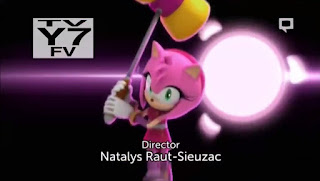
I always wondered why it was called a Piko Piko Hammer.
No, really; that's such a weird name!
What about Amy? She’s seen quite a lot of changes, both in looks and personality. The original Sonic series’ Amy is impulsive, extreme, and madly in love with Sonic, almost to stalker levels. It’s unsettling to say the least – but at least she has access to that endless supply of hammers, so she’s a priceless ally when something has to be smashed. I’ll admit it, her obsessive, stalker-ish tendencies towards Sonic were never that funny to me; stalking just isn’t the sort of thing I find funny. Maybe I read too many stories where that trait of hers became her only defining trait, and it made her annoying. Her defects are greatly toned down in the Sonic Boom show, turning her into the sane woman of the team, sympathetic to everyone, and also quite smart. In general, she’ll be nice, even to villains, but will kick with extra force if she gets betrayed. In this continuity, she tends to hide her crush on Sonic, which is a nice change of pace. She’s also protective, and a bit of a fashionista – although as the show progresses, she reveals herself to be bossy and kind of a control freak.

Unlike Sonic, Amy’s hair quills haven’t changed much. She also lacks the athletic tape on the hands and feet as worn by some of her friends, but makes up for it with a sarashi – this band of cloth around her waist, originally worn by samurai to sustain injury, likely an added measure by Amy to avoid getting hurt when swinging her hammer. Also of note, she still wears a red dress, but one much more different than the one the original Amy wears. And I’m thankful for that, because the original Amy’s dress was open wide at the bottom, making some camera angles show off more than they should. And I’ll live a lot better without seeing surprise panty shots on a character who’s supposed to be twelve years old. That’s just creepy.

How many cartoon characters can you name who can
cause an eruption by just smashing the ground?
On to Knuckles. Oh, the changes on this guy have been mocked since the first time he was revealed. I’ll make something clear, Knuckles in the Sonic franchise was always thought of as the most physically-capable, the strongest, despite being of the same build as everyone else. His new design reflects this reality, giving him more prominent muscles – but pathetic legs, I agree on that too, yeah, yeah, cue the “skipping leg day” joke. Now, the echidna really looks the part of the “strong, brawny guy” of the group. And sports tape, again, because of course. In the games, Knuckles was also known to be quite gullible, frequently falling for Eggman’s plans, and sometimes being too much of a hothead to think things through. Here, he’s… basically a moron, but a kind-hearted moron. Also an improvement over his original game counterpart, who was mostly a loner; the original Knuckles would rather keep watching over the Master Emerald than socialize with people. Also, while not frequently the focus, it seems that this Knuckles has some artistic talent!

"I drew it myself! In 5 seconds!
I call it Impossibly Quick Autoportrait."

She went by too fast on the English theme song, so I
cheated a bit. But that's alright. This one's better tham
any screenshot I could have taken.
Next is the only actual new character of the group, Sticks the jungle badger. Obviously I can’t compare her to her old design, she didn’t appear until Sonic Boom. However, her design highlights many elements about her. For starters, she’s an uneducated badger of the forest, freshly integrated to society, explaining her self-made attire. Even her shoes don’t match. She uses a boomerang as her main weapon, and for some unfathomable reason her hair is shaped like a boomerang. Makes you wonder if some characters fashion themselves after the weapons they get, or if they end up picking said weapons because it reminds them of what they look like already. Sonic purists will repeat that she looks too much like a lesser-known character named Marine the raccoon, and I can see the resemblances (however accidental they may be), but I think we should judge the character as she exists in her continuity, not by comparing her to previous characters who look a lot like her. She’s also still acting like a wild animal sometimes, clearly having issues adapting to society – there’s a few episodes about this plot. Screeching, defending her territory… yeah, she still does that. She’s also a conspiracy theorist nut, which is usually a pet peeve of mine, but they did it mostly correctly here. I’ll discuss this in greater depth later.

It's not Eggman if he isn't surrounded by an army of robots.
Last but not least, Ivo Robotnik, AKA Doctor Eggman. The evil doctor’s design in the regular Sonic series gives him a sort of egg shape for the body, thinner at the shoulder, wider at the waist. His new design for Sonic Boom inverts this, giving him broader shoulders but a thinner waist, making him seem more muscular than just fat. I kinda prefer this body shape for Eggman, actually. It looks a little closer to a real human. I also like the design of his new suit.

This Eggman is definitely friendlier with the main cast than his original
game version. Almost as if villainy is a 9-to-5 job for him, and outside
of "work hours" he doesn't mind hanging out with some of them. 
Personality-wise, Eggman hasn’t seen a lot of change, although his original personality was adapted for the more slice-of-life direction the show takes. He’s still an evil doctor trying to take over the world – but he first needs to seize the unnamed village the show takes place in, and that already proves difficult with Sonic and his team always thwarting his plans. The goofier nature of the show also caused his plans to get sillier from time to time, usually trying to undermine the heroes in some way. It’s not like the villains in a slice-of-life show are always going to attack in grand fashion! When it comes to level of danger, Eggman variates from harmless and comical to brilliant and dangerous – but still comical. It varies from episode to episode, all depending on the needs of the plot or the idea that the script writers had in mind. All in all, this Eggman is generally nicer and friendlier to the heroes, and while he still tries to defeat them from time to time, he had had genuine moments of friendship with them – he’s still their enemy, but in a rivalry kind of sense, it seems. Not that it has ever stopped him from being a threat.

Of course, there’s also Orbot and Cubot, but those… haven’t changed at all. Orbot is still the smarter one, Cubot is still an idiot. And the “smart-and-stupid” routine they have together makes for pretty great comical moments. They often get their own episodes to shine, which helps in developing their characters, probably moreso than the games ever would. I guess that’s all I had to say about them. 

Alright, see you in Part 2 as I start discussing the plot of the show!

June 16, 2017

Top 12 Video Game Environments

Like any story, video games are subject to feature a myriad of environments of all kinds. Need your story to take place in a populated city? In a desert? In a factory? In the sewers? There are so many options! One thing about video games is that by their composition, they can often feature multiple environments. Remember Super Mario Bros. 3: Grass, desert, islands in the ocean, a world of giants, a world in the clouds, an ice world, a maze of pipes and a fiery world! There is a very wide variety of locations that can be visited.

I doubt there’s a game out there that has them all – there are so many! Although their strength lies in how they're used. so it’s interesting to see how a developer approaches them. I recall Rayman Origins, which I reviewed two weeks ago; it had a desert world made of musical instruments, and a food world that also included frozen and burning lands.

I decided to pay tribute today to my 12 favorite video game environments. The ones that allow for the most creativity, the ones that offer great visuals. The ones that are tied to the plot, the ones that tend to be memorable. Considering that there’s at least three dozen different possible environments, I had to carefully pick my choices for the list, so if there’s an environment you like that is missing from the list, be sure to share it!

12. Locomotive Levels
Jump from a car to another, and don't fall on the
tracks. These wheels are deadly.
Screenshot from: Road Runner's Death Valley Rally
Instant danger: Have the characters travel across things in movement – like, say, the top of an airplane. But that’s kind of outlandish even for video games, so let’s settle for a train instead. Plus a train could actually be long enough to make levels of a decent length. Trains make for interesting 2D platform scrolling levels – as long as you don’t mind the blatant lack of wind pushing back on the hero, in some cases. Oh wait, did you mean “inside” the train? That’s possible too. Less jumping there, more fighting – I could see the interior of a train wagon being a set in a beat’em-up game. But the top of the train is bound to be a dangerous place, one where the winds play against you. Not to mention the possibility of falling off!

Note, if your game or show is set in a mostly realistic world, don’t do that. Ask Archer.


11. The Lethal Lava Land
Fire everywhere, lakes of lava, artillery everywhere,
and a nopn-stop sense of dread. But our target audience
is kiddies, so we can't call it Hell.
From: Super Mario Bros. 3
Speaking of conventions and physics conveniently ignored for a cool world idea… The convection would kill someone in real life! Merely standing near lava is enough to die, there’s a reason no one goes near that! But in video games, lava is usually harmless as long as you don’t directly step into it. Therefore, it’s perfectly possible to feature multiple levels in such locales. Due to the destructive nature of fire, this tends to be the setting for final worlds in many games – what’s better than a world of friggin’ fire? Some go even further, featuring literal Hellish imagery, making it effectively a world of fire and brimstone. It fits, no? I rank it pretty low on the list because it’s a very common setting, and most gamers can attest to seeing this at least once. Now, though, the really great thing is if you actually apply the physics and have the main character lose life points by just being near the lava if they’re unprotected, like in Super Metroid…

It's not just magma. It's alien magma. That makes it worse!
From: Super Metroid.

10. The Eternal Engine
What are those smashing pieces of machinery and these
spiky wheels for? We'll never know.
From: Rayman Origins.
Is it a factory? It can be. Is it a villain’s lair? It also can be. What it is, though, is a giant machine that is never turned off. A machine so large, you can run, jump and fight your way through it. Giant cogs, worker robots, moving parts that can crush and break any intruder… And of course, since it’s never turned off, one can only imagine how hot it must be in there, from the machines that have seemingly been working for eternity – hence the name. Now, will you enter an eternal engine that looks like it was made in the Industrial Era, or will you walk into a sleek, futuristic place? Probably the former more than the latter.

9. The Most Heavenly Level
You know things have gotten bad when even the Afterlife
is endangered.
From: Super Paper Mario.
The opposite of the Hellish world, the Heavenly world. For some reason, Heaven is just as dangerous as Hell. Is it because of the angels? Is it because the demons have overtaken it? Is it because the characters have no choice but to meet their maker in order to solve their problem? It’s like the solid cloud platforms of a level in the sky, with added symbolism. Throw in some temples for good measure. Maybe do like in The Simpsons Game and have the Simpsons battle folks like Benjamin Franklin or Shakespeare? You could also create a Stairway to Heaven like in Super Paper Mario and have the heroes jump upwards towards Heaven. Gotta say, though, one has to be gutsy to be heading out to beat up God.

This level from The Simpsons Game went
a step beyond and had you battle in
the afterlife the dead opponents you
killed in previous levels. Awesome idea.

8. The Ice Palace
Doesn't look very "Ice Palace"-y.
The slippery floors would beg to differ,
From: A Link To The Past.
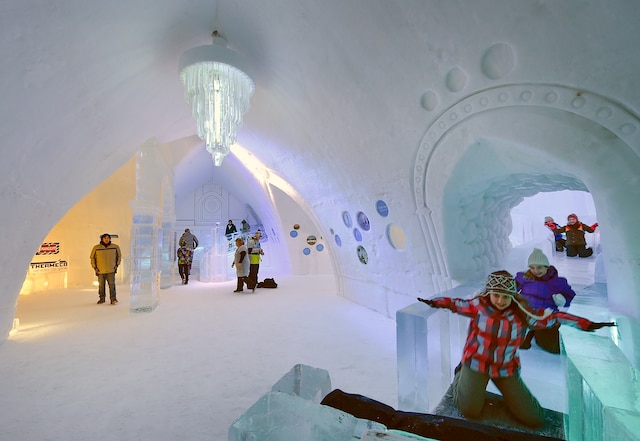
Even better than the ice world: The castle made entirely of ice. A perfect fortress for the local cool king or queen. A lair formed by the crystallized, frozen water. Its interior could have been made through magic, to create a beautiful interior with decorations and all. Or, it could look like it’s been handcrafted by a thousand mooks, with the finesse of a jackhammer – in which case the inside may feel like a natural ice cave, no matter how pretty the outside may be. Places like this aren’t unheard of in real life, either; in Quebec, during our winter festival, an ice hotel is built each year, so I can buy that some ice-based villains get themselves a cozy, cool place to live in. Or build it themselves. Obviously, not all of them are Elsa, not all of them can build from snow and ice in a matter of seconds, but please! A bad guy commands respect, and thus a respectable lair! If possible, a lair that follows their theme. Thus, ice palace.

7. Band Land
My wheels! These piano keys, they do nothing!
From: Mario Kart 7 (Music Park track)
It’s a common locale in Rayman games, but it’s been seen in various other games: Simply put, it’s a world entirely made of musical instruments. Platforms make sounds when you land on them. The trampolines are bongos. The enemies follow the theme in a way or another, either by being instruments or by toying around with nearby instruments in the décor. Level developers will frequently show off their creativity here, featuring every single darn instrument and musical element they can fit in. Be careful, though. Music can reveal itself to be quite the vindictive kind…


6. The Maze
Going back to the Mario well... Remember the Forest
Maze? The toughest part is to follow Geno and
remember where he went.
From: Super Mario RPG: Legend of the Seven Stars.
They come in all shapes and sizes. Sometimes they’re built in such a way that you return to the start if you lose your way. Mazes have always been an interesting element to add to a game, and they can definitely give that little boost in difficulty. On top of that, mazes can be applied in many genres – top down action game? Yes! Metroidvania? Those can sometimes feel like one huge maze where you can’t progress until you’ve found the equipment necessary – forcing the player to visit more areas of the maze to find what’s missing. Platform games? Oh yes, it’s entirely possible. Remember Level 8-4 in the first Super Mario Bros.? You had various rooms connected by pipes, and had to find the right path! What about World 7, the Pipe Maze, in Super Mario Bros. 3? It’s also very easy to turn dungeons into mazes, whether it’s in action-adventure games à la Legend of Zelda, or in RPGs. Other Mario example: Anyone remembers the Forest Maze from Super Mario RPG: Legend of the Seven Stars? Mazes can be infuriating to visit in games, but they nonetheless offer a very interesting experience – as long as you don’t quit in rage from not finding your way out.

5. The Amusement Park of Doom
In Video Game Land, always check who owns the park that
you're about to visit. Or you're gonna have some nasty
surprises...
From: Sonic Colors.
Another favorite of book and film action climaxes, the amusement park. Moving parts much like in the eternal engine, giant machines normally built for the enjoyment of the masses – only to become deadly to our adventurer! The Ferris Wheel will try to kill you! The haunted house will contain actual monsters! What about the security? …What security? If it exists, it’s probably hostile to the characters. The bright and colorful landscapes of amusement parks makes them an ideal location for a level, or two, or five, or more – amusement parks are common level types in the Sonic the Hedgehog series, often bundled in with the casino-themed levels. Sonic Colors takes place entirely in an amusement park! Ah, no matter how tempting it is, our poor heroes can’t take a break by riding the roller coaster…

4. Hailfire Peaks
The trope namer, featuring frozen tundras and fiery caves
in close proximity.
From: Banjo-Tooie.
This list has had fire; this list has had ice. Opposites attract, and nowhere is this truer than in video games where physics can be bent to great effect. Thus we have a world that is all-cold on a side, all-hot on the other. You could argue the logistics of that place don’t make much sense… but it makes for a friggin’ awesome setting. At one point you’re helplessly slipping left and right on the surface, avoiding the waters so cold they burn like dry ice… and moments later you’re in a fiery world, dodging streams of flames and jumping above the lava. Now, the name of the trope actually refers to any video game world that combines two regular settings (fire and ice, desert and music, temple and mountain)… If the two portions blend together, it can result in worlds and locations that have never been done before in video games! But I do have a preference for the fire-and-ice combo, I think it’s one of the more interesting mixes in video games, even if it’s one of the most common setting combinations.

3. The Abandoned Laboratory
Some freaky amoral things have been going on here.
That's, like, the most frequent reason for laboratories to
close down in fiction. Realistic reasons, like a lack of
funding, are far behind.
From: Undertale.
As a huge science-fiction fan, I associate laboratories with scientific experimentation and study. And also, laboratories are where the most amoral experimentations can take place. Freaks created from a geneticist doing things he shouldn’t have done, creatures born from unholy combinations. Dangerous machinery all around. Of course, you wouldn’t expect the original scientist to stay in this Hellish place, so most such laboratories are abandoned – and old enough for the walls to be dusty and cracked. The lights have stopped working long ago, giving the location a creepy atmosphere. And you can never tell what is lurking in the dark… what may be the monsters you’ll encounter. Many video game settings have a horror element to them (the ghost mansion, the creepy circus), and the abandoned laboratory is a shining example of those, as long as the developers know how to use the setting to its fullest.

2. The Macro Zone
This is an example of a game where your character is
naturally small, so everything else is big.
From: Chip and Dale Rescue Rangers (NES).
A bit of an unexpected entry, the Macro Zone is any occasion where the Hero steps into a world much more gigantic than themselves. Maybe they shrank; maybe the world they’re in is naturally bigger in every way; maybe they’re naturally tiny and only now are they stepping into the big world. Rats become large enough to be bosses, tiny toys become enemies to defeat, and everything has to be scaled. It’s like World of the Colossus. The Pikmin franchise is famous for this, and so are various other game series that have featured a few worlds based on this idea – as a big Mario fan, I can list off World 4, Giant Land, in Super Mario Bros. 3, as well as the Micro and Mario zones in Mario Land 2: 6 Golden Coins; one is a house visited while Mario is shrunk, the other is like a toy box made gigantic.

1. All the Worlds Are A Stage
Imagine that every single one of these connected rectangles
is a stolen piece of land from plains, peaks, volcanoes,
abandoned zoos, towers, and so much more.
No rhyme or reason, just all connected together by
doors.
From: Super Smash Bros. Brawl.
The video game equivalent of settings being back for the finale: When all the previous locations somehow merge into one. The Great Maze in Super Smash Bros. Brawl’s The Subspace Emissary is the biggest example (literally so, being a 2-hour long level), but other games achieved this in different ways. The fight against Zant in The Legend of Zelda: Twilight Princess, as an example (video below), sees Link being teleported with his enemy and battling him in previous boss areas. It could also be a way to reminisce on previous locations, by seeing them all together – it’s even better if they’re still in the same order. A wonderful throwback to an adventure that is coming to a close, a nice reminder of trials and challenges passed, or a strong return of many of those (as this type of level may often feature the puzzles encountered in previous levels, or the bosses defeated previously). I always thought this particular type of level was enjoyable for those reasons. Sure, they can be frustrating – if, say, the levels return with an increased difficulty, or if this particular setting drags on – but they’re well worth it.


Alright, that was my list. I hope you enjoyed. Tell me, are there video game settings I could have forgotten? Cutting it down to 12 means I had to take out many, many interesting video game settings. Are there any others that you enjoy, that you would have put in your own Top 12 list? Feel free to share them!