Watch me on Twitch!

Streaming on Twitch whenever I can. (Subscribe to my channel to get notifications!)

July 4, 2016

Dream Theater's The Astonishing (Part 2)

Part 1 - Part 2 - Part 3

Continuing from Part 1, welcome back to this review of The Astonishing, a rock opera created by Dream Theater.


Not sure if they modeled Gabriel after what LaBrie
looked like when he joined the band in 1992...
We continue into “The Answer”, where Gabriel explains that he’s not at ease with the role his brother puts on his shoulders. Then we go in “A Better Life”, where Arhys says that he comes from a lineage of warriors and will fight until the established totalitarian order is toppled. More than that though, he explains that he does it for his son Xander, whom he refuses to see grow up in the extreme poverty of the people of Ravenskill. He swore to his wife, who died at Xander’s birth, that he would do anything to give him a better future. It’s a good motivation for the character, and while it’s also a bit cliché, I’m willing to give this one a pass because it’s so heartfelt.

He looks straight out of a PS4 game.
Or XBox One? Not sure. I'm a Nintendo
guy, I can't tell the quality of CGI
graphics apart on the other consoles.
Also to note, James LaBrie voices all the characters here. He tries to give each character a distinct feel; Faythe and Arabelle have soft voices. Arhys sounds proud and strong. LaBrie also tries to make Gabriel a tenor, and emphasizes this in his voice when playing him. Lord Nafaryus has a heavy, threatening voice when he gives orders and all the ham that goes with it (though, this is Dream Theater; hamming it up at least a little was inevitable), though he tones it down considerably when talking about his loved ones. Like Nafaryus, Prince Darius has a gruffer voice, but unlike his father he keeps that tone through the whole album. It’s nice, but as a result you can’t always tell which character is talking right now. Thankfully, the lyrics booklet provides info on which character is speaking, along with the location and time of day each song takes place – you know, like a play. I suspect this is gonna go on Broadway at some point… Talking about the booklet, it presents all eight characters of the story with nice, if slightly unnatural-looking, CGI models. There’s some kind of President Snow vibe on this picture of Lord Nafaryus… though I suspect Nafaryus is nowhere near as bad, and would never use children as human shields… This is also the only place where you can see the name of Prince Daryus. The other seven characters’ names are said in the lyrics (Gabriel, Arhys, Faythe, Nafaryus, Arabelle, Xander, Evangeline), but nowhere in the lyrics is Daryus’s name ever given. Whoops! And we’re talking about the second antagonist of the story, he should be kind of a big deal! But I’m getting ahead of myself.


“Lord Nafaryus” presents to us the primary antagonist as the proud sovereign of the Greath Northern Empire of the Americas, who rules with an iron fist. Nafaryus makes a big deal of Gabriel being able to move crowds, but he particularly hates that the young tenor is being called a God. Yeah, that would annoy me too. He also states that Gabriel will never become the ruler of this land… just wait, just wait. When he discusses his family, Nafaryus suddenly changes; he’s no longer the hammy ruler, but a loving family man who cherishes his wife and children – though even here he seems to prefer his daughter over his son, despite his son being the next ruler of the G.N.E.A.. That part is really sweet and shows that Nafaryus is a more complex character than his name would suggest. My theory is that being hammy is the only way he found to be heard and feared, and this façade usually vanishes when he’s with his family. A strong song that I really enjoy.

“A Savior in the Square” opens on the calm life of Ravenskill, before a show Gabriel puts together for the citizens. Nafaryus and his family show up and take place among the people to hear the Savior’s gift. Gabriel found an old guitar, a relic of ancient times, and already discovered how to play it. Is that a secondary superpower of The Gift? He instantly learns to play any instrument? People, we gotta test this, bring a Theremin! Then Gabriel sees Faythe and is speechless at her beauty. Love at first sight? Can’t believe they went there. I’m gonna have to keep a cliché counter or something. The song continues into “When Your Time Has Come”, where for the first 2/3rds Gabriel sings a song that is absolutely beautiful, and also oddly prophetic (read the lyrics with the plot of the rock opera in mind, and you’ll probably see what I mean). Before checking the booklet, I also thought the last part was sung by Gabriel, though it’s actually sung by Faythe, who was so moved by his song that she falls in love with him – and turns to the side of the rebels.


The next song, “Act of Faythe”, details the backstory of the pink-haired spunky princess – oh right a spunky princess, we’ve never seen that before, am I right Disney? She feels sorry for the citizens who live in extreme poverty and decides to try and help them. She also explains that she grew up with a music player she found hidden in the castle, a player with the word “Bug” written on it. As a result, she’s one of the few people in the G.N.E.A. who grew up actually listening to music. How do I know that? Well, the lyrics say a lot, but still miss out on a lot of details. The Dream Theater website thankfully expands on the story, filling out all the blanks, but it would have been good not to have so much information missing in the album itself in the first place if you ask me. This song doesn’t even mention “Bug” anywhere, yet it’s a plot point in a later song!

Gabriel’s song has ended. “Three Days” starts as Lord Nafaryus admits he was touched by the song… but also that his fears have been confirmed: Gabriel is a menace to his throne and must be arrested! The sovereign is still nice enough to give them a three day ultimatum; if Gabriel is not brought to him before them, Ravenskill will be in flames and in ruins. Wow, harsh much. This song contains a more jazz- or swing-sounding tone in the middle and at the end, it’s really nice. And it meshes surprisingly well with the prog metal that surrounds it. And so fun to sing, too! On this, Lord Nafaryus and his family leave, probably off to a residence closer to Ravenskill (because they will be moving a lot between Ravenskill and said residence, and if the royal family lived too far, it would cause a whole other bunch of continuity problems… I’ll get to that later). As if to indicate the end of this scene – or the beginning of the next – we then get a NOMAC track. I still think those are meant to separate the album in four “acts” in case they make a play out of it. Admit it, “Three Days” would be a perfect way to end Act 1.

Moving on to the next part of the album. Arhys puts some courage into Gabriel by showing him that the entirety of the Ravenskill Militia is behind him, ready to protect him, in “Brother Can You Hear Me”. This is a really nice track with great importance, showing the strength of the bond between these two brothers. It also ends as Gabriel, now filled with determination, choosing to keep up the fight despite Lord Nafaryus’ desire to capture him.


Next is “A Life Left Behind”, which starts with an excellent bit of Spanish-sounding guitar. This one follows Faythe as she’s still shocked by the effect Gabriel’s song had on her, and she finally chooses to listen to her heart and go to the man she loves. I swear this could have come out of a bad Harlequin and it would still have fit perfectly. Queen Arabelle admits that she can’t control her daughter anymore, and asks Daryus to spy on her to know where she’s going. Seeing this as his chance to get recognition from his father – oh hey, here’s another interesting trope, the son who tries his damndest to make his dad proud! Again, very common in fiction.


This continues into “Ravenskill”, which follows Faythe’s venture into the small town. See? That’s what I meant. If the trip between Nafaryus’ palace and Ravenskill is too long, Faythe would not logically have time to go back and forth between the two… remember, everything past this point happens in less than three days! I’d say the royal family is living a bit out of town while Nafaryus waits for Gabriel to be brought to him. To me, this makes perfect sense; that way, Faythe can go to Ravenskill, so can Daryus, and days-long trips are avoided. Goes in with the idea that people have reverted to basic means of transportation: walking, or horse carriages. Can’t go all that fast like this! So, at first she’s unsuccessful due to the untrusting community (and frankly, which Ravenskill citizen wouldn’t be? The Lord has sworn to set the whole place on fire in one, maybe two days!). Then she sees Xander, probably remembers he was close to Arhys in the crowd earlier (I’m making suppositions because even the website doesn’t state how Faythe knows Xander is Arhys’ son) and convinces him to bring her to the rebel training camp where Gabriel is hiding. Despite Arhys first trying to make her go away, the Princess reunites with Gabriel and the two hatch a plan; they’ll organize a concert and sway the Lord to their cause, again by singing.

Next is “Chosen”, where Gabriel sings about how this plan is the chance they have to get everyone a happy ending. Um, quick note, I haven’t seen a lot of rock operas that ended well… Downer endings tend to be common in the media… ask “Metropolis Part 2”… Despite the slightly sappy, Disney-esque tone, this is one of my favorite DT ballads now. Not that it tops some of their other best ballads, but it’s definitely up there in the Top 5. I swear, it almost makes me want to put the “Chosen one” cliché in my good graces again! After this song, Faythe runs back to her family to try and convince them to go to the concert on the third night of the ultimatum.

However, Daryus stayed behind and saw not only where the rebel camp is, he also found where Arhys lives. In “A Tempting Offer”, Daryus follows Arhys’ son home and takes little Xander hostage. When Arhys arrives, both men confront each other, and Daryus makes an offer to Arhys; if he surrenders his brother to the royal family, Xander will have a happy future, live in abundance, and poverty will be a past long gone. At the same time, Daryus will get the recognition he wants, and will no longer be the ignored child of the royal family. Daryus leaves on those words, leaving Arhys with a very cruel dilemma: Either he sacrifices his brother for his son’s future, or he doesn’t and the fight continues against the order, with possibly more casualties on the way. Even as the song ends, the violins repeat the melody of the confrontation, as if Arhys still had it in mind and started thinking. Come to think of it, this IS a story about all the forms of love; love between brothers, love of a parent for a child, and of course the love Gabriel and Faythe share. One of my favorite themes of the album, really; and this also happens to be one of my favorite tracks on it.

After the NOMAC-produced “Digital Discord”, it’s “The X Aspect”. Arhys weighs his options, wondering whether he should betray his brother to give his son a better life (arc words, if there ever were some), or take the risk of not handing Gabriel over to Lord Nafaryus. After asking himself what Evangeline would suggest, he finally decides to betray his own brother. And just to pour salt in the wound, the melody of “Brother Can You Hear Me” is reprised on bagpipes, like the universe telling Arhys “Remember what you said earlier, remember when you said you would always protect your brother! Jackass!”


Next is “A New Beginning”, where Faythe tries to convince her family to go see the concert. At first Nafaryus refuses, still seeing Gabriel as nothing more than a fraud (although, if Gabriel really was a fraud, then why is Nafaryus so Hell-bent on capturing him? With this, isn’t Nafaryus admitting that he’s scared of the guy’s gift?). Arabelle manages to calm down Nafaryus by reminding him that he, too, used to live in loneliness listening to music while no one else could; with the music player labeled “Bug”, the same one Faythe is listening to. I just hope Nafaryus had good taste in music, or I’d be sorry for her. Defeated by his own wife, Nafaryus reluctantly accepts to go to the concert on the night of the third day. And thus we get four amazing minutes of solos. I realize this album has less overly-long musical bridges compared to previous DT albums… then again, previous DT albums also had really long songs…

Disc 1 ends with “The Road to Revolution”, an ensemble musical number where Faythe and Gabriel state again their hope to sway her father to their cause, to the good of music. Daryus watches with a smug grin, no doubt proud of putting Arhys in such turmoil. Arhys, in turn, sings about how difficult choices can be in the face of revolution, and how he hopes his betrayal really is the right thing to do. Nafaryus… just hams it up for fun, as you’d expect. This is a great finale for the disc, and definitely a good way to end the first Act (if you prefer to think of this story’s acts as Disc 1 and Disc 2, rather than splitting it in 3 to 5 acts like most plays would).


Disc 2 will be reviewed next Friday!

July 1, 2016

Dream Theater's The Astonishing (Part 1)

Part 1 - Part 2 - Part 3

I decided to do something special this time around: A review of a music album. A long one.

I never hid it, I am a gigantic fan of music. I love all the genres, except country music and the more Death side of the metal genre. I’ve never been big on growlers, I want to be able to understand what the singer says – and bands that veer into growling or outright screaming all the time… yeah, no, sorry. Not my type. I can see why some people enjoy this, but it’s not my cup of tea. I’ve always enjoyed rock, and then metal came in naturally, until I discovered Dream Theater and progressive metal. Ever since, I’ve been hooked.

Left to right: Jordan Rudess (keyboards), John Myung (bass), James LaBrie
(vocals), Mike Mangini (drums) and John Petrucci (electric guitar).

Ah, the Majesty Symbol. Best seal
of quality ever made.
There is just a quality about prog metal and how its melodies incorporate all kinds of keyboard instruments. I became a fan around the release of their self-titled album, in 2013. I was checking the tracklist on Wikipedia and, seeing Illumination Theory, going “22 minutes? That’s for real?” I had past experience with longer pieces of music (among others, I enjoyed In-A-Gadda-Da-Vida, which is 17 minutes long), so I gave the album a listen. General consensus from die-hard DT fans is that it fits what the band usually does, but doesn’t have enough “special” about it to make it stand out.

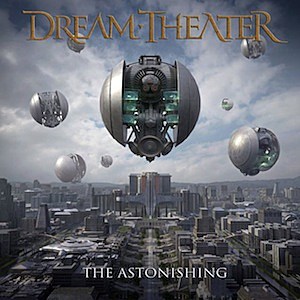
The band’s next effort came out on January 2016: The Astonishing, a two-disc album that is also a rock opera, thus telling a full story. It’s 130 solid minutes of music, longer than a lot of movies. The advantage of rock operas is that since they tell a story, you can get into the plot, identify with the characters, and love it both for the ongoing storyline and the music that accompanies each part of it. Pink Floyd’s The Wall, as an example, is 81 minutes detailing a singer’s backstory, then showing him willingly separating himself from the rest of the world, slowly going crazy because of drugs and almost becoming a fascist, until his own consciousness puts him on trial to make him tear down his metaphorical wall. The music is excellent and the story, while flawed (there are some details missing that could have helped understanding the plot), is still enjoyable. That’s a common issue with rock operas, really; combining music and story in a little under 80 minutes (or, for those who dare, in more than 80 minutes over 2 CDs) means that some details, however vital they may be, could get left out. I'll discuss this later.


The Astonishing also makes use of a full orchestra; to be precise, the City of Prague Philarmonic Orchestra. Not a first time for Dream Theater, who have used an orchestra for some of their live releases and included other symphonic instruments on a few studio tracks, but never before have they used one for an entire album. As a result, while these discs contain the mandatory electric guitar, bass, drums, keyboard and vocals, it also puts some emphasis on the orchestra, peppering most, if not all songs with violins, trumpets (even bagpipes at one point!)… And, most importantly, a choir to accompany James LaBrie’s vocals. I would say it’s closer to symphonic metal than prog metal. For a while now, I’ve tried getting into symphonic metal, and it’s difficult because some of the most prominent bands in the genre (like Rhapsody, formerly known as Rhapsody of Fire) tend to tell long stories through multiple albums, causing a new listener to feel locked out of the continuity unless they go and binge-listen to the band’s music in a few sittings. Another issue I have with symphonic metal – at least, the tracks I’ve heard – is that the mixing results in the orchestra often being nearly buried under the metal music. It’s called “symphonic metal”, guys, not “prog metal with a side-order of orchestra in the background”. The “symphony” half has to feel like it’s a part of the whole thing, it can’t feel like an afterthought. Dream Theater did especially well in that regard on The Astonishing, leaving plenty of room for the orchestra and allowing their music to mesh with the progressive metal instruments. Same goes for James LaBrie’s singing, which never overshadows the choir too much, although I think LaBrie’s vocals could have been raised a little more on some songs during mixing of the album. Just a little.

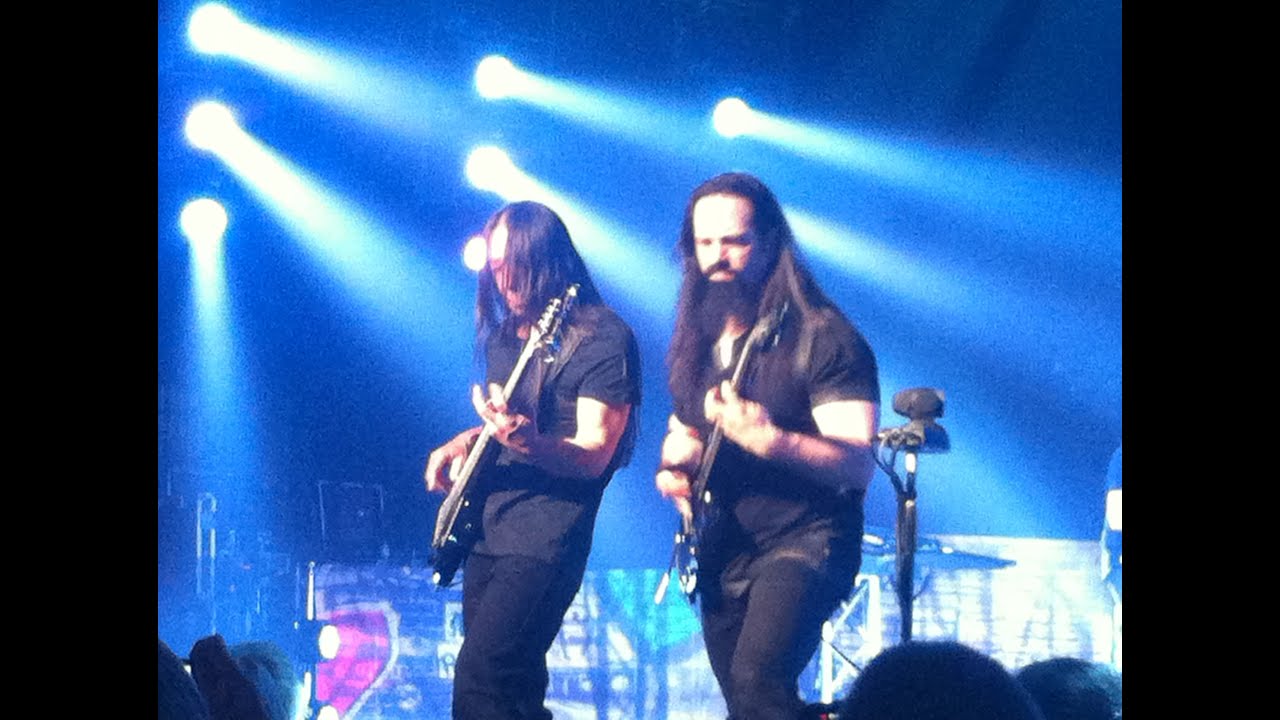
The Johns of the group usually get to shine together
at the front of stage.
The music still has all the trademark Dream Theater elements: Complex melodies, tons of odd time signatures (and of course, a lot of time signature changes in every song), heavy electric guitar, soft electric or acoustic guitar (John Petrucci excels at both), solid keyboard work from Jordan Rudess… If I have a few things to say about Dream Theater themselves on this album, it’s this: First off, I think bassist John Myung isn’t given enough spotlight for such a massive album (though granted, bassists aren’t usually the ones to steal the show, and Myung is a more reserved type of guy so maybe he doesn’t mind; still, more of him would have been good). Then… Mike Mangini. I say that name, and I can see some DT fans bare their teeth and growl, while others point and let out a ghoulish rale. Others just sigh. I know their previous drummer, Mike Portnoy, who was one of the most prominent faces of the band, was unique in the way he was drumming and Mangini’s style is less impressive, a bit more mechanic, a bit less inspired, but I still enjoy the post-Portnoy DT albums nonetheless. Outcry, Lost Not Forgotten and The Enemy Inside are among my favorites. Just because one thing changes doesn’t make the whole thing unlistenable – take the hint, people who hate the new DT just because it doesn’t have Portnoy in it. However, I felt like Mike Magini’s drumming was stronger in this album, closer to what Portnoy could achieve: drumming that accompanies the melody, with more eccentricities depending on the current section in a song, feeling like the drums are just as much an instrument as the guitar. Oh, Mangini’s defects still do show up on a few tracks (in A New Beginning’s 4-minute outro, as an example), but overall I thought he did a lot better here than in A Dramatic Turn of Events or the self-titled album.

But going back to my earlier point, the danger when you bring forward a story with your music is that some will analyze it from a storytelling standpoint. I’ve seen The Count of Tuscany being called corny, I’ve seen people who hated the ending to Metropolis Part 2, and I’ve also seen some people who thought The Ministry of Lost Souls was creepy rather than heartwarming or even tear-jerking. This story was mostly written by John Petrucci, who inspired himself from epics similar to Star Wars or Game of Thrones. Can’t be more blatant than that; a medieval-like setting in a science-fiction future. Forcing a genre into another; it’s like having your cake and eating it too! Petrucci also mentioned that a major theme of the story is the automatization of everything; how everything becomes virtual, everything’s connected (seriously, the Internet of Things… Does my toilet really need an app and Bluetooth connectivity?), we’ll have self-driving cars, putting more and more of our lives into the hands of machines… Yeah, it’s a scary thought. Taking it to the point that technology is the one doing all entertainment-related things, though, that may be pushing it.

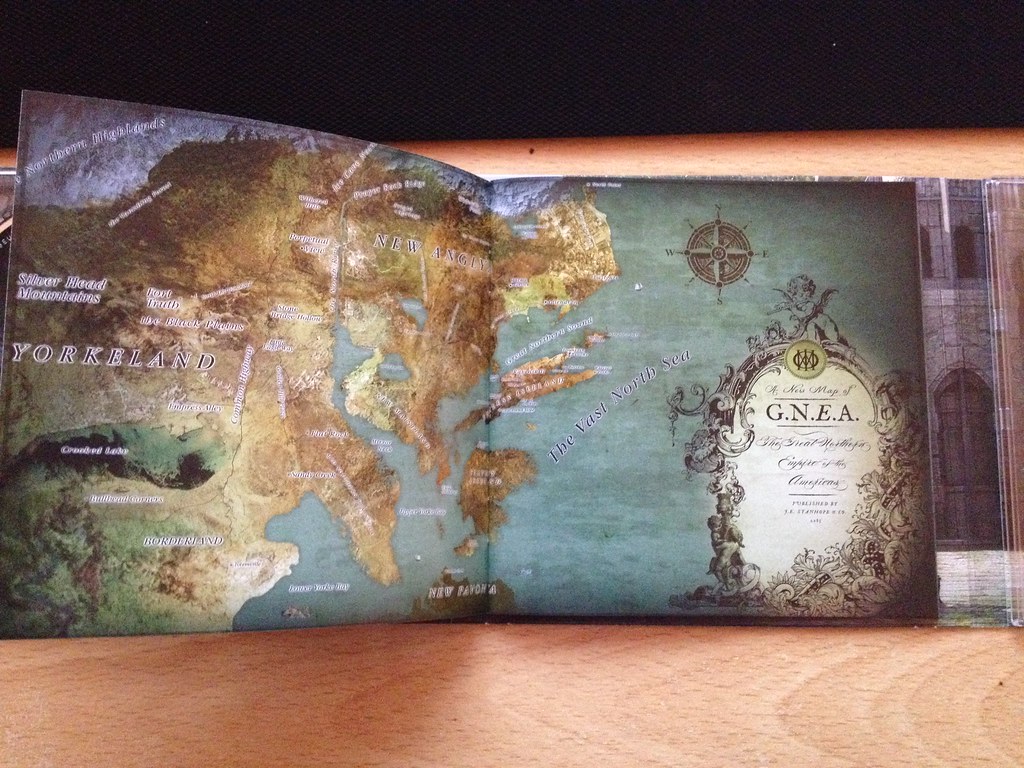
The Astonishing takes place in an alternate history where the United States turned into a monarchy of sorts, and we follow events taking place in the Great Northern Empire of the Americas. All entertainment is produced by flying spherical devices called the Noise Machines (NOMACs for short). The booklet that came with the album shows that the inside of the NOMACs, when they’re seen from behind, looks a lot like the interior of the circle in the Majesty symbol. Nice little touch there. The villagers working under the totalitarian regime of the royal family cannot create entertainment and don’t even have time to produce anything. So wait, the Americas are mimicking the medieval times, and travel with horses, except there are still machines except the only machines we ever hear about are the NOMACs…. We’re not even into the plot yet and I’m already confused!

Yes, those things.
They can see you

The highest number of tracks they had on a studio album
before this one? 13. Live album? 18.
This is 34.
By the way, look at the back of the CD case. Yes, it’s normal to have track titles there. First thing we notice is that these two discs contain a total of 34 songs. Is that a problem? Technically no. It’s actually a surprise, coming from Dream Theater, to see so many tracks on a double album (The first CD has 20 songs, which is one less than the band’s sixth, seventh and eighth albums combined, and that’s about 240 minutes of music! And the second CD has 14, about as much as the CD release of Score, split on three discs!). For this album, the band experimented with shorter songs, the longest one being 7 minutes 40 seconds. It’s not usually what they do, but they managed it pretty well here. And while no single song can be called “epic” here, the album itself qualifies as “epic”. Also, some songs continue into others, like “Dystopian Overture” that continues into “The Gift of Music”. I must say though, this tracklist has some, um, major spoilers to say the least. If you already know the names of the characters, you might figure out something important that happens near the end, just by looking at the titles…

The tracklist also has five songs decorated with a NOMAC symbol, indicating them as NOMAC tracks; those are basically noise representing the unsettling “music” the machines artificially create. The first track, “Descent of the NOMACs”, is exactly what it says on the tin. The next three, “The Hovering Sojourn”, “Digital Discord” and “Machine Chatter”, appear after very important plot-related moments. As if the NOMACs know what’s going on and highlight the important songs… Honestly, I’d find those things even more unsettling if they were indeed spying on the people and aware of what’s happening. The last NOMAC track, “Power Down”… yeah, you don’t need a degree in rocket science to figure that out. It spoils that the NOMACs get shut down at the end, which implies a good ending to the story. But shhh, I didn’t tell you, the CD case did!

As for whether or not those tracks are superfluous… the middle three are, in my opinion. They’re the shortest (the five songs total about 5 minutes together), but outside of the first one and “Power Down”, there is not much of a point to them outside of hammering it in that the NOMACs really suck at music composition. Besides, other tracks, like “A Savior in the Square” and “The Path That Divides” also contain short moments that could count as NOMAC music.

The album really starts with “Dystopian Overture”, an instrumental that encompasses multiple musical moments (yay, alliteration!) of the album. After a few dozen listens, I still haven’t figured out which song every section is taken from, but I figured out most of it. It starts with “Lord Nafaryus”, then “The X Aspect”… and so on. If there’s one thing I can say, it’s that for an instrumental supposed to represent the dystopian future, it actually sounds very hopeful! The song then changes into “The Gift of Music”, where the Narrator explains the setting. Then we get to hear Arhys, brother of Gabriel, father of Xander. He explains that he leads a revolt against the regime held by Lord Nafaryus-…….wait…..


Lord, Emperor? The album doesn't seem to agree on
what his title is.
Is that name for real? Lord Nafaryus? Really? That’s his surname? I mean, it’s silly. Really, really silly. Come to think of it, it doesn’t even make sense. Does that mean Faythe’s full name if Faythe Nafaryus? She doesn’t seem as pleasant now, does she? Kinda like Gru in Despicable Me, nobody calls him by his surname because it’s Felonious (no really, look it up)! Okay, I’m getting ahead of myself. Still, I’d say a silly name doesn’t really fit the mood of the story… well, until you realize just how many common clichés are in it and you go “yeah… it fits right in with the rest”.

Arhys then explains that his brother has a fantastic voice. He’s this close to calling it magic, but he never does. We are supposed to understand that Gabriel brings music back and has such a marvelous voice that he can move crowds and rally them to the cause of the Ravenskill Militia… and that’s about it. It’s unclear whether it’s magic or just a lot of charisma. And while some authors use this ambiguity to keep some surprises from the audience, here it’s not handled all that well. There’s also implication that Gabriel is a “Chosen One”… just the 3912th Chosen One in fiction, keep ‘em coming, I’m definitely not tired of this cliché at all.

Three songs down, 31 more to go. I'll take a break here and resume this next Monday. In the meantime, I invite you to give the whole album a listen, you can find it on YouTube on Dream Theater's official channel.

June 27, 2016

Muramasa: The Demon Blade (Part 4)

Go read the previous parts if you missed them. Today, I,m looking at the extra endings, which can be unlocked once both storylines have been completed - after which, you equip two particular blades to Jinkuro or Kisuke, and step in the final boss's room... to see what I'm about to explain.

Equip Tsukiotoshi and Mumei Tamanoo.
I mean, for anyone who isn't versed in Japanese, these names mean nothing.
They meant nothing to me really, but the game says they're important...

A battle of wills. Who is the best swordsman
using demon blades?
Well, I played them both, so I guess I am.
In Momohime’s second ending, we learn that Kongiku is being pursued by her fox brethren due to stealing the mask from Inarimyojin the Fox God, that same mask that allowed Jinkuro to speak with Muramasa Senji. Jinkuro is thus accosted by Yuzuruha and a fox, revealing why that kitsune was helping Kisuke: To retrieve that mask! So that’s why Yuzuruha had teamed up with Kisuke! The ninja boy shows up and a fight takes place. On the outside, it looks like Momohime versus Kisuke, when it’s actually a fight between Jinkuro and his old master, Oboroya Senju, whose techniques were given to the boy. It’s a very hard fight since, just like you, Kisuke can change between blades and you cannot get through to harming him until you break his current blade. It’s a very long fight.

Haven't you heard? Amnesiacs can stay badass. She may
be Oboro and not Momohime, but the power of Jinkuro is
within her and she can still slash you to pieces!
When it’s over, Kisuke realizes Jinkuro is too powerful, so he takes down the two of them in a suicide move. Mortally wounded and having a change of heart, Jinkuro decides to merge his soul with Momohime’s, which revives her – and gives her the Oboro techniques, although she falls unconscious. Next thing we know, she lives with an elderly couple and lost all of her memories, so the couple took her in as their daughter and called her Oboro. Because she kept saying that word when they found her, apparently. When the village comes under attack by a large Red Oni, “Oboro” grabs a sword and quickly defeats the monster. Surprised at these abilities, Oboro decides to go look for answers, to find out who that “Jinkuro” she keeps hearing about in her dreams might be. Blade in hand, she goes on a journey…

In Kisuke’s second ending, he, too, battles Jinkuro-as-Momohime, in another very tough duel. In the original story, the Shogun had found a way into Heaven; in this version, Jinkuro killed the Shogun easily and is the one trying to access the holy fountain of Heaven to become a demon king. Torahime recognizes the body as Momohime’s, but notices there’s something really wrong with the way “she” acts. Kisuke promises to save Momohime by defeating Jinkuro! When the evil spirit is defeated, it leaves Momohime’s body, allowing her soul to go back into it.


The adventure continues.
Torahime, seeing her mission completed (the Shogun is dead after all, even if Kisuke wasn’t the one to do it), has to return to the afterlife. Saddened to see his love go, Kisuke asks for her final favor, and her answer is simple: She wants him to take care of Momohime. Later, at the family grave of the Narukami clan, Kisuke learns from Momohime that she cannot rebuild her clan alone. Oh, do I sense a hook-up? She also says that there are many demon blades out there, and she will not be at rest until they’ve all been stopped. Therefore, Kisuke and Momohime go on an adventure where the ninja will look for wielders of demon swords, defeat them, and take their weapons away. …I like this ending, it’s the best happy ending of the game.

To see the third and final ending for each character, you first need to collect all the blades, then forge the Oboro Muramasa. Only problem, the way to it is locked by many weapons that can only be collected by defeating bonus Enemy Lairs and the bosses inside them. One lair has two dragons (like Kisuke’s seventh boss), one has centipedes, one has no less than 8 Big Oni, two of each kind, each with boss-level health and ultra-dangerous attacks no matter what level you’re at. There’s also the final Enemy Lair, titled Total Pandemonius, which claims to require a minimum level of 92 and is made up of waves based on all the other enemy lairs. Enjoy! Soon enough, you get all of the missing swords, and can forge the best weapon in the game: Oboro Muramasa. A sword so powerful, it can cut through fate itself and, perhaps, even rewrite history. The only downside is that you may still need to level up a little before you’re allowed to use it (due to minimum Strength/Vitality restrictions). To get the third and final ending for each character, you need to defeat the final boss again, with this sword equipped.


Definitely something isn't right with these two. Well, actually,
"Kiku" seems nice enough, but Yukinojyo is acting weird.
Though he can't be as awful as the one in the previous
timeline.
In Jinkuro’s third ending, we fight Fudo-Myoou again, except this time when the real deity starts attacking, we find ourselves going back in time. We see a Jinkuro still alive, who sees an alive Momohime and Yukinojyo coming his way. This was before the big attack on the clan! Jinkuro is still sick, though he manages to think of a plan. Later, we see Momohime after her wedding to Yukinojyo. The servants are overjoyed, though there is one of them, wearing orange, that Momohime doesn’t recognize. Turns out this is Kongiku, the kitsune, disguised as a human. Momohime walks up to Yukinojyo and, in their discussion, the samurai says that he is looking to upgrade his talents by creating a new technique, and that he might call it the Oboro Style, or perhaps, the Izuna Style… …Izuna, as in, Izuna Jinkuro. Oh goodie, Jinkuro took Yukinojyo’s body and married Momohime. Guess he liked her after all. It’s probably just a good ending for Jinkuro, who was supposed to be seen as a villain despite being the main protagonist… And yes, before you ask, this "Yukinojyo" managed to apease the climate between Momohime's family and the Shogun, so there's no danger of the massacre happening again.

Yes. Traitors must die. At least the Kagami clan is
alive and well, this time.
In Kisuke’s final ending, we get to the Shogun after he has killed Torahime again, and the battles goes as it did during the first playthrough. However, after Inugami is defeated, Kisuke finds himself going back in time through the Oboro Muramasa’s power, back to before the attack on the Narukami home. He takes the Kuzuryu blade and quickly defeats the ninjas who were coming to kill Torahime’s family. He explains the situation, and brings forward the machinations of the Shogun – and especially the actions of an underling of the Shogun, some guy known as Shikami Danjyo. Yes, the traitor that got killed during Momohime’s story (See Part 2 for details). However, this is not enough, and despite Kisuke saving Torahime’s family from murder, her father still sends his samurai in his way – until he gives back the Kuzuryu Muramasa. Thanks to the Oboro style he still possesses despite the time travel, he can control the wicked blade, and swears to put its beast to rest by going around the world and defeat evil. Kisuke says he doesn’t know when he comes back, but is certain that he’ll come back someday for Torahime.

"I will tame this sword! I know I can do it! I can change it into a nice sword!"

The… end?

Christ, the people at Vanillaware need to learn to write good endings. Maybe that one went in line with the Buddhist philosophy that was a part of the story… I still don’t enjoy it. For all the work I went through to get there, I guess I was hoping for something less bittersweet.
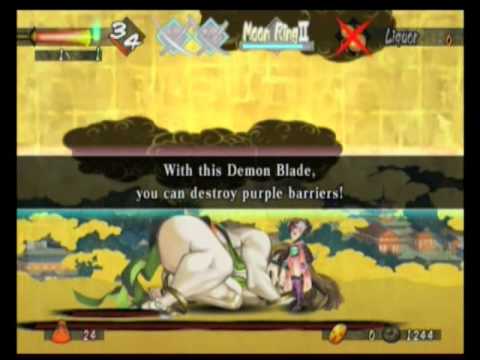
See that at the top? A single hit point.
By the way, beating the whole game in Shura Mode (the harder difficulty available from the start) unlocks the Shigurui difficulty… in which you must beat the game again, but you only have one Hit Point. …Good luck. This makes some of the challenges near-impossible to complete. Really, I hope you don’t wind up facing too many kite ninjas, those fuckers explode when you defeat them and it’s hard to avoid the blow. Also look out for the Oni, all four of them, especially the two green ones. The problem in Shigurui difficulty is that you can’t allow yourself to take any damage. Even if you memorize the patterns of all the types of enemies, it will still be hard, maybe even impossible. You want to know why? You always have three swords with you, and when one breaks, Jinkuro-as-Momohime or Kisuke will take damage. You can’t allow a single sword to break. On the other hand, when you switch to a different sword when the previous one didn’t break, the new sword doesn’t make an instant slash that can defeat nearby enemies. Using special moves depletes a sword’s life bar, so it could be dangerous. The challenge is just enormous. Try Shigurui only if you want something REALLY hard.

Not that you even have to, as the other difficulties also have their own little bonuses: By playing as a character in post-game, you can go and complete all the dungeons the other character went through, with bonus rewards when you do. This is the only way for each character to collect all of the cookbooks and accessories.

Alright then, so it’s time to give my final words about this game. Is it worth playing? Yeah, I’d say it is. The beauty of the graphics is one of the major selling points, and for good reason. This is, without a doubt, one of the prettiest games of all time. When it comes to 2D graphics, anyway. The characters are perfectly animated, the backgrounds are lively and colorful, and even the darker parts are impressive to look at. The amount of detail put in every sprite, in every screen. Simply marvelous. Although, as a result, cutscenes with special animations are few and far between (outside of the ending cutscenes of course, where some new images of the characters may appear – as an example, Kongiku disguised as the human Kiku, or Kisuke and Momohime’s reincarnations, which wear different clothing). Even the swords and their special attacks required different sprites!

Talking about the gameplay now, this game does have a lot of interesting ideas: Using three swords that break when they receive damage or when you use their special talents too often, the forging tree in Muramasa Senji’s forge (I don’t like as much the “Minimum Strength/Vitality” requirements, but that’s minor), the Cooking mechanic (and the fullness mechanic, which prevents you from cooking too often or using all of your healing items at once), the restaurants and peddlers, the quick way to travel around the map… Many great ideas there. I also love that you can enter Enemy Lairs and fight either hordes of enemies or multiple bosses at once. Even better, in postgame with a character you can revisit all of the other character’s dungeons and defeat the bosses in them! The one thing that annoys me with dungeons is that, for all of them except the last one for each character, once you’ve completed one, you need to backtrack all the way to the entrance. In empty rooms, without a single encounter until you’re back on the map of the region you were in. Which is easily three wasted minutes.

Also discussing the map, it’s really large, almost labyrinthine. Easy to get lost if you don’t know where to go. Thankfully, your next destination is always indicated somewhere on the map (which you can access by pressing the - button on the Classic Controller), though unless you have a map of that region (bought from a peddler), on the first playthrough you can’t be sure on what’s the shortest path to get there. In a way, it’s not so bad since you need to level up in order to use stronger weapons; on the other hand, it’s easy to get lost. The accessories and some swords give plenty of interesting bonuses.

Now, the story… First off, as much as I want to praise Vanillaware for this game, I have to admit there are big problems. First off, the translation is rather poor. I can understand why they wouldn’t have English voices, but the dialogue is often insufficient to understand. This game deals with certain philosophies related to Buddhism, so anyone without knowledge of this religion will be lost. Second, this game is deeply rooted in Japanese culture, and it’s often difficult to understand what’s going on unless you know about Japanese history and mythology. All the bosses and some of the enemies are based on youkai. In itself, that wouldn’t be a problem, but combined to the poor translation…

Part of the problem is that this beautiful folklore and mythology is associated to a story that starts as both main characters can’t remember what happened before, and the ensuing adventure connects the dots. For starters, we only get half the story with each character – Torahime or Kisuke are never mentioned in Momohime’s story, and though each character can cameo in the other's story in hot springs, their exchanges never bring much. This kind of plot works a lot better in film; it can be done well in some games, but the way they chose to tell the story here makes it difficult to follow, and leaves players puzzled. I couldn’t get into the plot at first, this was the main reason I wasn’t playing this game more at first. I carried through, so I succeeded in the end. Adding to this, I believe I’ve stated my dislike for the way this game treats female characters? Promising to us no less than two strong female character only for them to turn out not so strong… Yeah.

Thankfully, the end result is enjoyable, and I feel like its strengths are in its gameplay. Pay attention to the story if you want, let it accompany the gameplay; or don’t, and just enjoy this game for the awesome action RPG mechanics.

If you want to try it, there's also a PlayStation Vita version of this game, with four bonus chapters to play. It keeps things pretty much the same, but the bonus chapters may be interesting to play through, as they are also connected to the large story in a way or another.

Let’s see… what’s next week… Hm, I wonder what I should do… Should I do something special, or wait a little longer before doing the third year anniversary review? I think I’ll post something special before the anniversary review. Something out of my comfort zone. How about an album review? Let’s try that. I wrote something some time ago that I really enjoyed, and I feel like sharing it with you people. Does that sound good?

June 24, 2016

Muramasa: The Demon Blade (Part 3)

Go read the previous parts if you haven't!
In Part 2, I completed Momohime’s storyline (or is it actually Jinkuro’s?), and explained a few more things about the game. Now, I’m explaining Kisuke’s side of the plot.

Go, Kisuke! The bigger they are, the harder they fall;
Well, time to see how they- Oh look, a bautiful sunset!
After runniung through the forest, Kisuke is confronted by ninjas who ask him who his boss is, and why he killed so many of his ninja comrades. Kisuke replies that he can’t give an answer, since he doesn’t remember anything; he doesn’t even know why these ninjas are gone after him. To try and stop him, the ninjas unleash a giant robotic-like ninja using pinwheel blades bigger than Kisuke himself. Well, it’s early for a boss, and this one IS pretty tough, but soon enough Kisuke depletes the boss’s bar entirely.

After this fight, I suppose the ninjas run away; Kisuke then meets Yuzuruha, another kitsune, who decides to strike up a deal with him; she needs his strength for some unknown mission. In return, she gives him access to the cursed blades of Muramasa Senji, on his quest to retrieve his memories. Kisuke runs across a portion of the world and finds himself in a city, where he goes all the way to the top of the castle. There, encountering ninjas, he tries to know why he’s being called a traitor. Even Yukinojyo’s there! It’s explained that Kisuke stole the legendary blade that was being sought during the mission where he betrayed his squad, and kept it for himself; he also killed at least six of his comrades and keeps their skulls attached to his waist… How charming. However, his antics may have provoked demons to come out and attack.


Argh. I hate centipedes. It will be a pleasure to kill them.
Just how many are there anyway?
And what big demons, indeed! Centipedes. Lots and lots of creepy, giant centipedes crawling all over the city. Each one of them is bigger than two houses. So Kisuke manages to repair his giant mess… by killing all the giant centipedes, which is actually rather tough considering there’s a whole bunch of them. There’s one good side; those fill the screen. So if you keep slashing away, you could rack up an impressive combo count. With all the centipedes gone, the ninjas show just a little bit more respect for Kisuke – despite still calling him a traitor – and even Yukinojyo chooses to keep Kisuke alive since his talents could come in handy later.

Even Rankai the monk is there. See? Momohime and Kisuke’s stories do combine. Yukinojyo explains that Momohime’s older sister, Torahime, is a shrine maiden and she might have been possessed by a ghost; Yukinojyo tasks Kisuke with defeating that ghost. Off we go! On the way towards Mino, we can come across a few enemy lairs as well as a hot spring where Kisuke may find Momohime bathing.


Holy crap, that horse is freaking awesome. I want one.
With a transcendent saddle.

And she's awesome with a bow. I would probably enjoy this
strong female character... if she really was one. Change
to Damsel In Distress role in 3... 2... 1...
We head into Mino and find Torahime about to lead a group of giant undead samurai towards the palace of the Shogun, in Edo, in an attempt to kill him. Why? Because, apparently, the current Shogun of Japan was the one who ordered the attack on Momohime’s family. By the way, Torahime is riding a giant ghostly horse; if that’s not badass, I don’t know what is. And the boss fight against her is really hard, too; even when you defeat her ghostly guards, she tends to gallop on her giant ghostly horse around the stage, getting away from Kisuke, and shoot with her bow to hurt him. And it would be simpler to reach her if there weren’t so many tall bamboos blocking the way, forcing Kisuke to jump, and perhaps get an arrow in the face! That horse is no pushover, either. Still, after an impressive fight, our ninja manages to defeat Torahime.

Thankfully, she’s not harmed; only her ethereal mount is. He asks what happened, and gets most of the story; he’s a ninja who was tasked with getting the legendary blade known as the Kuzuryu Muramasa, owned by Torahime’s family. That blade apparently contains the spirit of a demon, hence why her family was supposed to seal it away. Along with his squad, Kisuke masqueraded for six months as a servant of their family, until the big attack happened; in it, Momohime was mortally wounded (hence why she starts the game as a body whose souls can interchange in her own storyline), while Kisuke tried to protect Torahime and was, too, mortally wounded as a result. Not that it helped, Torahime was killed too. Except people around these parts have a bad tendency to start walking again like nothing happened, even after they’ve died. Kisuke survived, he doesn’t know why. Same for Torahime, all we know is that now, for some reason, she’s leading a group of undead samurai. I hope we find answers to that soon!

Chasing evil spirits? You may be looking for Jinkuro.
Who you let pass freely to battle a green titan.
...Girl, you're an incredible fighter, but you suck at your
evil-repelling job.
Kisuke decides he needs to follow Torahime, and so he finds his way towards Totomi. There, he runs and jumps on top of tree branches and finds a scene of desolation; the undead samurai, all defeated by holy strength. When he asks where Torahime is, they answer that she ran away to a holy temple in Yamato. Also on the scene is a little girl named Sayo, who doesn’t want to let Kisuke pass, since he’s a trespasser, “like an evil spirit, and evil spirits cannot pass”. Hah, right! Bullcrap! How could Jinkuro pass so easily, then? The young girl, Sayo, does say Kisuke seems possessed by someone or something… Hm, I wonder… Ack! No time to wonder! Sayo attacks! And don’t be fooled by her small size, she hits hard! She keeps summoning crows and scrolls to attack, and really likes to spend a part of the fight suspended by said crows, away from your ground attacks. Which is a good strategy, since you can only activate your blades’ special moves on the ground and many special moves can’t hit enemies who stay in midair.

Is she being lifted by birds? Yeah. Balloons were just too much trouble.
She couldn't control her flight - also, they weren't invented yet.

It's the first time I see a guy having a flashback
and being a bystander in that flashback.
When Sayo is defeated, she leaves, but not without saying that she's surprised the Oboro Style must still be used among living people. Wait, Oboro Style… wasn’t that the power used by Jinkuro to steal Momohime’s body? We’re then treated to a flashback from Kisuke’s point of view, seeing him talk to a spirit called Oboroya Senju. The old master explains that he desires his techniques to remain in use, and thus he offers to give them to the young ninja. Kisuke can walk around this flashback, seeing a dying, greyed out version of himself accepting the Oboro style on the condition that he can avenge the deaths of the people he served, and retrieve the legendary weapon. Oboroya also states that all others apprentices of the Oboro Style were killed by one of their own – clearly Jinkuro – and he can merge his own soul with Kisuke’s, giving him free access to these techniques. So this is what happened! Oboroya merged with Kisuke!

Christ, that spider is ugly. It's a few details away from
having a trollface for a head.
Kisuke goes back to look for Torahime, and she’s run off to Yamato, which was the last place to visit in Momohime’s storyline, and enters the Buddhist temple, which was Momohime’s last dungeon. At first he’s assaulted by monks and ninjas, but we find the higher floors mysteriously covered in spider webs and inhabited by large arachnids… The next room is just a giant web, and in the middle of it awaits Tsuchigumo, the giant spider youkai. It has mummified Torahime and is ready to eat her! Kisuke fights the giant spider and manages to defeat it along with all of its offspring, saving the captured monks at the same time.

Come to think of it, what is it with this game that promises to us “strong female characters” only to have them turn out to not be so strong? Momohime is actually Jinkuro possessing her body… Torahime was cool as a boss yet keeps running into trouble or getting captured…

In the next cutscene, we learn that the monk who had been captured saw Torahime’s burial, he’s certain that she’s dead. When Kisuke asks Torahime, she explains that she passed a pact with the deity of the next world, Amitabha, in order to avenge her death at the hands of the Shogun’s men, and that she has a limited number of days to do so. She then explains that her army of undeads was exorcised by Sayo met earlier, so she needs help fulfilling her mission. But hey, Kisuke can help her, right?

Hey, look, it's the sunset! A scary one. You can just feel the war as it goes
on before this background. It's like the end of time is approaching.

Using souls to attack? That's demonic.
Says the guy who's been using soul-powered blades for a few hours now.
Kisuke runs to Shinano where he finds a battlefield; living ninjas and spirits alike are fighting in a war. Aesthetically, this looks like a very unpleasant location, much like Hell in Momohime’s story. Kisuke soon finds Torahime and her army of ghostly samurai, only to learn they’re out numbered 5-to-1 against the Shura army and are trapped; if they attack, they lose, and if they wait for too long, Torahime's allotted time for revenge will run out, and they lose! Kisuke decides to find the general of the Shura army and defeat him… and so he finds a giant undead samurai monster that goes by the name of Chigurui Bishamon. Kisuke defeats the monster (it’s an easy battle if you ask me), but gets slashed in the back and almost dies, until he’s taken in by Yuzuruha and healed by the power of Inari, the fox god that kitsunes also worship (that includes Yuzuruha and Kongiku). Yuzuruha then explains the story of Inugami, the Dog God who became dangerous so Inari stopped him and took his powers away; since Inari was still a threat, the fox god had to seal it in the Kuzuryu, a blade created by Muramasa Senji and then put in the protection of the Narukami clan… Momohim and Torahime’s family. And the Shogun likely wanted to steal that weapon to unleash the power of the Dog God.

If I can go to Hell, I CAN KILL A GOD!
After his recovery, Kisuke finds out that Torahime has left for Mount Fuji, where she’ll break a special spell that keeps the barriers in place. Once again, Kisuke goes after her. The things one does for love… Our ninja finds himself scaling Mount Fuji and reaching the top, only to discover the undead samurai army defeated – AGAIN! – and Torahime and her ghostly horse, also defeated – AGAIN. Christ lady, you dare call yourself an action girl? All you’ve been doing since I met you in the game is lose and lose! All the time! She explains that her attempt at breaking the barriers awoke the Dragon God, and it got pissed and attacked them. Kisuke decides that he can take on a God, and gets into a fight with the beast. It starts off pretty simple, until the Dragon God uses lighting effects to turn the battlefield completely dark and hide in the darkness, which still lets it use plenty of annoying moves… thankfully, despite all these obstacles, Kisuke beats up the God. It apologizes for its rage after admitting defeat. From there, we learn that the Shogun is possessed by the power of Inugami, and the Dog God is attempting to open the gates of Heaven in order to access the magical well that would give him all of his powers back, immortality, and raise him to the level of a greater demon – hence why the Shogun is doing all those things. Thankfully, the protection around the Shogun’s quarters is weak, so it’s time to attack!

Kisuke thus runs to Musashi. On the way, you can go into an Enemy Lair that pits you against four bosses, so it’s the perfect place to level up before the big final battle. The ninja soon reaches the city of Edo, which seems to be on fire at this moment. There’s a scary red glow in the background where the castle is, and some rooms have backgrounds that are nothing but flames. Even as we get closer to the final battle, we see the place get darker; the final room before the boss is all dark, with fire behind.

I don't like that orange glow.

The ninja enters the final room and finds the Shogun, Tokugawaa Tsunayoshi, who easily defeated and killed Torahime. Hey, you were supposed to stay behind! How the Hell do you want me to stay in love with you if you get yourself in deep trouble all the time? I don’t want a lemming for my girlfriend! Anyway, the spirit of the Dog God inhabits the Shogun, and proudly proclaims that with Heaven’s Gate opened, he’ll become an arch-demon and burn all of Japan to the ground! Torahime says her final farewell to Kisuke who promises to avenge her.

I've been killing vaguely humanoid monsters like this
for days now. They don't scare me. I won't stop till your
fat ass lies lifeless! You'll pay for your attack on the Narukami clan!

The first fight against the Shogun is tough, because the guy keeps summoning ninja spirits to attack, and he also likes teleporting left and right and protecting himself with some sort of red-and-black force field. He also has a load of HP, more than any boss seen so far. Soon enough this annoying fight is over, and we get to the second part; the Shogun unsheathes the sword and some kind of demonic matter comes out, transforming the tyrant into Inugami, a giant dog.


That thing is just monstrous, creepier than any other boss. And there was a giant spider with an ugly face, for Christ’s sake! This giant dog has only two legs, and uses a whole lot of annoying attacks; bring up any annoying attack in the game, he probably has it. Thunder? Yup. Portals that attack Kisuke? You bet. Teleportation? Hell yes. Anything that instantly breaks one of your blades? That too! The new thing here is how Inugami vanishes, only for his jaw to reappear as big as the screen to try and bite Kisuke. Or when the jaw comes from the top, hits the floor in a constant stream of darkness and teeth. Good night kids!

O.O
Holy...

Another very tough fight but Kisuke wins. However, Torahime is still dead; Kisuke travels into the portal leading to Heaven, convinced that an actual good deity would not have let a girl like her die in such cruel ways. Blame the deities, I’ll blame the makers of the game. Kisuke jumps on colorful lotus flowers, and reaches yellow clouds, where he meets the great deity Amitabha, the one who allowed Torahime to come back to life to avenge her clan.


O.O
...Holy, very holy indeed!

Hm, who might these two fine young people be?
That anime hair can't lie, though. This has to be Kisuke.
I’m not entirely sure what happens afterwards, I would need more knowledge in the Buddhist religion, but here’s what I got: Amitabha refused to bring Torahime back to life, so Kisuke took his own life in exchange, committing seppuku (No!). Knowing that his criminal deeds on this adventure will take him to Hell, Torahime prays to Amitabha so that she and Kisuke get reincarnated in the living world, to live together, so that Torahime can show Kisuke how to attain inner peace. They were reborn as Ohana and Kanbei, respectively, and the boy only has passing dreams of his adventure, while Ohana was contacted by Yuzuruha in dream. The kitsune is doing this to reunite them in their new lives. End of Kisuke’s story.

OR IS IT?

….Yeah, it is. Sort of. As I mentioned, every character has bonus endings that can only be seen after each story mode have been completed. Now the player can go back to either character’s final boss to see a wholly different ending. It’s also possible to cut through white barriers and access the bonus dungeons.

I’ll come back in Part 4 to discuss the secret endings and the bonus dungeons!