Watch me on Twitch!

Streaming on Twitch whenever I can. (Subscribe to my channel to get notifications!)

March 3, 2020

VGFlicks: Final Fantasy: The Spirits Within (Part 2)

Lots of plot to cover, let’s continue right away. (Click here for Part 1.)

"How did I get to see Aki's visions during the operation?"
"Plot relevance."
"Okay, but how-"
"Magic, alright? Magic. ...Oh, hi, full-armored guards."

"You're all under arrest! Oh, and that nurse in the
background too."
After arresting the main cast (Aki, Sid and the Deep Eyes), General Hein proceeds to arrest the people in charge of keeping the force field up around New New York City. Then he asks his underlings to create a breach in the force field. Why exactly? Because he thinks the Council will listen to him if they see how many more human losses these aliens can cause. Have a reminder that he does all this to shoot the Zeus, a giant goddamn orbital cannon, at the meteor that landed on Earth, which caused the invasion in the first place, and that everyone keeps telling him that blasting that meteor will only make things worse.

But hey, he’s the bad guy. “I don’t care what anyone says, I’m right!”

So prisons in the future are made of lasers?
That's a waste of taxpayer money.
While she’s in prison with Sid and the Deep Eyes, Aki gets to explain her prophetic dreams. The aliens were waging a war on their world that eventually destroyed and shattered their planet, and a piece of it made the trip and landed onto Earth. It contained several examples of their alien wildlife (explaining why the Phantoms are so varied in forms and sizes). All the living creatures on it died during the trip across space that took them to Earth. They're not so much invaders as confused undead, aggressive from being on an unknown world.

Wait. You mean the Phantoms, these alien ghosts… were ghosts of aliens the whole time? I would have never guessed! Shocking!

…..D’OY!

Gotta wonder if the actors also were "Are you serious?"
when they reached that part of the script.

And of course, now that Hein has let them into the city, there won’t be enough manpower to stop them. A giant Phantom has gone through. By the time the General realizes what he’s done, it’s too late; the Phantoms cause a power outage in NNY. It turns off the protagonists’ prison security, so they’re able to escape. Swarmed by Phantoms, the Deep Eyes get in a vehicle and drive to the military docks, where they could flee in Aki’s ship. They have to break through a station to get there though, and Ryan, the black guy of the team, is wounded in the process and has to be left behind…

Oh no! I'm gonna miss his uncreative snark and his
milquetoast personality, that... er...
What's his name again? ...Neil, right? Oh crap, too late.
Remember when I said this was a horror movie? We’re getting there. The rest of the group gets to the ship and things are looking good, but they need to free Aki’s ship from military impound. The Phantoms reach the group just as Neil is hotwiring the machine to free the ship, but Jane’s there as backup to kill the aliens. Just as Neil succeeds, a Phantom sneaks up on him and sucks his soul out – and Jane succumbs a minute later after she runs out of ammo, taken by the giant Phantom that just showed up. Ryan was still alive, and he holds his own, but he suffers the same fate. Aki and Sid manage to save Gray in the nick of time, and they escape.

...gotta know when to fold 'em.

It’s only once they’ve reached space, the safest place right now, that the full weight of what just happened hits them. Aki and Gray cry, and they hug, and then they kiss, and then they French, and then… No, really. “Hey, three of our friends just died horrible deaths to ghost aliens. Wanna try zero-G sex?” That’s a completely normal course of events. Okay, fair, it’s more romantic than I’m putting it, these are two exes rekindling their relationship, but… right after the sheer horror that just transpired, you two decide it’s a good moment to fuck?

I mean, by common horror movie rules, they're goners now. They might as well enjoy it while they can.

Everything about Hein says "I'm fucking evil" from
mannerisms and actions. And yet, the performance
ruins any chance of this being fun to watch.
Later, Dr. Sid, who's driving the ship, says that the eighth Spirit will likely be found in the one place too dangerous, the place they haven’t searched yet: The sector of the impact crater, where the planet piece landed on Earth. Meanwhile, General Hein is remorseful and even suicidal after what he’s caused, millions died, but his plan still worked; the Council thinks it’s wise to give him the activation codes for the Zeus Cannon if its usage will end the menace against mankind. Sure enough, Hein knows exactly what to do when he gets to the Zeus ship: Aim its cannon at the impact sector. This can only end well on both sides.

The evil general just wanted an excuse to use
his dear machine and calm his trigger fingers.
Sid, in the flying ship overhead, localizes the eighth and final Spirit in the crater area, while Aki and Gray are lowered into the zone in an ATV suspended by cables. Said ATV has a small force field around it to protect them. However, before they reach their destination, the Zeus Cannon is fired by Hein and his lackeys, directly at the crater, which destroys the last Spirit. The second Zeus blast tears a hole into the meteor and releases the Phantom Gaia – a gigantic monster with tentacles representing the life force of the destroyed alien world the meteor came from. You know, the evil, alien counterpart to that Gaia thing Sid and Aki were going on about. The nigh-godly thing breaks the cables, sending the ATV falling to the ground below.

Aki manages to contact the Zeus ship and tries to explain the truth behind the alien invaders, and that shooting at them will just make things worse. But whereas she says “stop shooting!”, Hein understands “keep shooting, assholes!” And he does, further breaking the land within and around the crater, and killing all the Phantoms – except the Phantom Gaia, which respawns all the aliens immediately afterwards.

I am pretty sure this kind of beast was foretold
in the Cthulhu Mythos.

Aki’s ATV has fallen into the chasm, with the Phantom Gaia above them, and to her and Gray’s surprise, there’s a giant lake of blue stuff below. Yep – it’s Gaia, Planet Earth’s soul. You mean to tell me that in this futuristic setting, in which technology has gone through leaps and bounds, the Gaia theory would have been simply confirmed by just scanning several kilometers through the Earth? Nobody thought of that before? Sid, Aki, you’re shitty scientists! 

Oh hey, finally a shot that's pleasing to the eye.

This is apparently a universe where aliens turn nice upon
finding out humans can have babies.
You can tell; this one is going from red to blue.
The most basic color metaphor of all time.
While Phantoms are closing in on her and Gray, Aki has a vision where the Phantom illness inside of her feels the baby now growing inside her from the sex she had with Gray earlier (never mind that it hasn't even been a day yet), and it changes allegiance to the Earth’s Gaia as a result due to the, not kidding here, “hope of new life”, becoming a new eighth spirit as a result. If you read this and think the writers pulled that out of their ass… well, I think so too! I’m gonna make a bad pun here; it’s a Deus Sex Machina! Of course, the Phantom illness also turns blue to signify its new allegiance. With this, Aki manages to activate the Gaia wave, and it looks like it's going to work, but-

What’s that? Zeus needed to recharge due to overheating, but General Hein has overclocked it to shoot again! And at the same time, he undoes the Gaia wave that had been started and causes the Phantom source to spread even further. Hein tries a last time, but his machinations build too much pressure into the cannon and the entire Zeus spaceship explodes. Gotta love self-dispatching villains.

Okay, he's dead. And so is his compensation vessel.

And once again, the color blue saves the day against the red.
Speaking of, Aki and Gray have survived, but the soldier is wounded. Aki can still start the Gaia wave, but after saying farewell, Gray (who is holding her hand) sacrifices himself to the Phantom Gaia, which sucks his soul out into itself while it’s imbued with the power of the eight Spirits, carried from Aki. Gray’s soul is absorbed, and the gigantic monster proceeds to turn blue as the spirit of the Earth takes it over. And just like that, the aliens are defeated. Aki is carried out of the chasm with Gray’s lifeless body, and she looks around to see some color and life return to the world. Well, it just took 99 minutes of uninteresting darks, greys and browns before we finally had something that’s nice to look at. Flying shot of an eagle on the returning nature, and roll credits.

Christ. Okay, so I get what they were going for with this plot, but – damn it, this feels so pretentious. The film is trying to be this big sci-fi plot with technical mumbo-jumbo, spaceships, aliens and whatnot, but it falls flat on its face each time we come back to discussing esoteric topics like Gaia, ghosts and life forces. The clash is too distracting. Although the Gaia theory is a topic of discussion in real life, its use as a literal "planet soul" here is hamfisted and ridiculous. Can sci-fi and fantasy work when combined? Yes! I've seen examples of that. Here? It’s not working, but the movie keeps going without any trace of self-awareness (nor self-deprecation) about the situation. This film takes itself way too seriously. Even the comedy, whenever there’s any, suffers greatly.

Actually, scratch that. The tone is too serious.
All attempts at comedy fail.

This movie feels like a tech demo; it showcases the
amazing power of CGI, but is lacking in every way
that makes a movie truly great.
Meanwhile, I’ve already said much of everything else at the end of Part 1. This is an animated feature, but it doesn’t try in the slightest to display any sort of interesting visuals – the characters just look like regular humans, though perhaps humans struck a little harder by the uncanny valley than those in other animated films. None of this is helped by their personalities, which are as boring as grey clouds on a rainy day. They tend to be by-the-numbers stereotypes or common character builds, as is the case of the three members of the Deep Eyes who ultimately served very little purpose outside of being expendable. To top it all off, the delivery of the script is similarly boring. In an attempt at playing these characters somewhat realistically in spite of the full mo-cap animation, we get people who just aren’t given a chance to let their acting chops shine. General Hein could have been a hilarious villain who does all sorts of exaggerated, comical motions, like James Woods’ previous role as Hades in Disney’s Hercules, but no – “Tone it down, we want this ridiculous asshole to be as reserved as possible!” Can’t even find any interest in the set pieces, since most of them are shrouded in darkness or utterly uninteresting to view.

The only shining point is, once again, the animation itself. From the intricate detail on cloth and skin, to the motions of Aki’s hair (even if the movies adores to show itself off by forcing her hair to move all the time), it can be pretty impressive to look at. We’re seeing an issue of style versus substance here; the style is impressive, but there’s no substance of any interest to back it up. This movie’s only shining grace is that it’s a part of the history of cinematography as the first movie released worldwide to utilise motion capture for its entire cast. (It is, ironically, not the first to use mo-cap for all its actors, as the first is a Sinbad Bollywood animated movie that's seen a very limited release.) The technique would later be used, in much better fashion, by other filmmakers. For 2001, it’s a boring film, but also stunning testament to what the technology of CGI can and would later achieve, in film and in video games. With the gift of hindsight, 19 years later, it’s just a boring film.

I’ve said before that I consider “bad” and “boring” to be different things. Some bad movies are completely horrible, while others can be entertaining to watch. A boring movie has little to save it, regardless of its perceived quality. Being boring goes against the idea of entertainment. What's weird is that, if you do check out supplementary material around the movie (by reading around the FF wiki, as an example), you can read full backstories for all the characters, discover the names of all the vehicles and ships, and see just how much work went into designing everything - but none of this shines through in the finished product.

On the other hand, we did get this bonus video, which is... um... Well, see for yourself.


Do I recommend this movie? No. It’s too flawed, too bad, too generic, too uninteresting. That said, if you want to watch it as the important milestone in CGI that it is, then you could always seek it out. I won’t tell you that it’s a fun watch; but I won’t take away the merits the film had upon release. That said, I actually bought the Collector’s Edition of the DVD, which has an entire second disk packed with content.

You know what else this movie is good for? From it, we can see how technology has evolved over time. Before this film, we had the first computer special effects with TRON in 1982. Then we saw the first CGI characters interacting in live-action worlds, such as the T-Rex in Jurassic Park in 1993, and (alas) Jar Jar Binks in 1999. This film, in 2001. In 2002, we have Gollum in Lord of the Rings, one of the best examples of a mo-capped CGI character in a live-action film. Andy Serkis would find a lot of work in the two decades that followed. Later mo-capped movies would be so much better, even if the uncanny valley wouldn’t entirely go away; Polar Express, Monster House, A Christmas Carol, and I'm forgetting several… By 2009, we would see an entire world made with CGI in James Cameron’s Avatar, with humans exploring and interacting with that world. CGI characters among live-action casts would become a common type of film aimed at kids, with loads of examples; think of Garfield, the Smurfs, or Hell, even Sonic the Hedgehog this year! Sure, these movies aren’t always good, but each one is an attempt at improving the interactions between CGI and live-action to an increasingly believable level, through a mix of CGI and practical effects. Let’s not forget several instances of CGI characters in movies for older audiences, either; think of Hulk, Rocket, Groot or Thanos in the Marvel Cinematic Universe. And nowadays, several movies use CGI for damn near anything, as well...


So yeah, that’s all the good I can say about Final Fantasy: The Spirits Within. It’s a milestone in CGI animation and special effects. Outside of that, it’s terrible. There been many more movies with the Final Fantasy name attached to it, all of which I can safely assume are better (if only marginally) than this one. We even had Final Fantasy XV: Kingsglaive, released in 2016 shortly before thr release of the much-awaited Final Fantasy XV on home consoles.

Now that this is done, well, I know I’m gonna be two months late to the party, but I’m going to start work on a Sonic Month, due April. (Why not March? I’ll be using March as a hiatus to write much of that content.) See you in April, then.

February 28, 2020

VGflicks: Final Fantasy: The Spirits Within (Part 1)


There’s quite a bit of history to a movie such as Final Fantasy: The Spirits Within. It’s actually ironic as I find everything surrounding the movie more interesting to talk about than the movie itself.

But first the basics. This movie was released in American theaters on July 11th, 2001. It bears the name of Final Fantasy, but instead of being a direct adaptation of any game in the franchise (which would probably require an entire series rather than a mere film), it instead features its own story. It’s implied to be a part of the Final Fantasy series, but the connections stop there. It features the blend of fantasy and science-fiction that the franchise was veering towards at the time (in FFVII in particular). But that’s it; the film feels like Final Fantasy “in name only”.


Picture taken from the sets of the film, as actors in mo-
cap suits were playing their parts.
It’s also known as the first animated film released worldwide featuring photorealistic CGI, a practice that would become a staple of video games years later. Photorealistic CGI in cinema would be used a couple times with performance capture (AKA motion capture, or mo-cap) for entire films, as seen in Polar Express, Monster House, Beowulf, A Christmas Carol, Mars Needs Moms… all movies that have seen ground-breaking success and were never made fun of for crossing into uncanny valley territory. This movie was the first to fully use the technology, thus being a pioneer in this new way to animate movies. For 2001, that’s impressive. And knowing how far the tech has come since, I guess we can thank it for this contribution to the world of animation and special effects. That said, the mo-cap effects here are showing their age in a way that’s fairly noticeable.

The people at Square Pictures had high expectations for this film, hoping to achieve box-office success (of course) but also making plans for the future. The silliest idea, if you ask me, is that of “animated actors” – that is, they were hoping to reuse the models of the human characters in The Spirits Within in other roles in future feature films. We’re not talking “these characters reappear over the course of multiple films”, we’re talking “these models appear in different movies, as different characters”. A few problems with this idea: I can imagine this getting confusing after a while for viewers. CGI technology was improving quickly at the time, so the models would be outdated eventually. And finally, this movie bombed HARD, making 85 million dollars worldwide at the box-office for the 137 million dollars it cost to make. It’s one of the biggest box-office bombs of all time.

They even tried to pass her off
as some sort of top model. 

February 21, 2020

Top 12 Games With Unique Styles (That I've Played)

He who says that video games cannot be a form of art is a fool. Why would it not be art, exactly? Because it’s “for kids”? Because of the direct interactivity the player has with it? Because it’s for uncultured swines? Or perhaps is it because the unfortunate, enduring stereotype of the average gamer is a 12 years old kid screaming obscenities at other 12 year olds while playing Call of Duty or Fortnite?

This is all unfair. Video games are art.

One example of several. This list will be full of them.

Video games can tell enthralling, complex stories that put the player in moral dilemmas. They can contain soundtracks that a player will enjoy above any other music. They can provide personal challenges like nothing else ever could. They can look anywhere from 8-bit to the most modern CGI, or switch it up with seldom-seen styles. Or they can have none of that, because like all forms of art such as movies, music, paintings or literature, there are examples of the amazing and the horrendous.

Today, I focus on style. Much like plot, the graphical style of a video game is determined in the early phases. The sky is the limit! Sure, AAA titles will go for the best CGI they can manage, while indie games will do whatever they please - but there's always the odd title out there that does something out of the ordinary. If there’s an attempt at making something special with a concept, not only will the graphical design show it, but the concept might extend to gameplay as well. This list will be filled with examples of great creativity.

For this list, I’ll only take into account games that I’ve played; I may have beaten them or just given them a try.

12. Auditorium
Oooooh, pretty.
As I was building this list, I realized that games that go for a very special style are frequently taking inspiration from a different form of art, a different craft. Video games that play around with music are fairly common, though most of the time it’s a track playing and the game plays along to it. In Auditorium, which I reviewed a long time ago on this blog, you solve the puzzle in order to create the music. It involves redirecting a stream of “music” into the required areas, which will turn its white form into color. You can even feel the music getting more complex the more goes into the required zone, hear instruments adding themselves to the track. As far as music puzzle games go, this one put a spin on the idea, one that helped its style.

Which one of these will play Megalovania now?
11. Just Dance (Franchise)
As an example, this choreography over a song that makes
numerous references to comic books features backgrounds
mimicking Jack Kirby's art.
Perhaps a controversial choice, which is why I’m keeping it low on the list. What’s so “special” about the way this game looks? Music plays, some character dances, you dance along to it, right? On the subject of style, it’s more complex than that. Every level has its dancer(s) and choreography, but it also has its own background and animations to go with them. Usually something related to the current song, no less. If one doesn’t think it’s enough to make this list, something else made me decide to include Just Dance on here: This is one of the most colorful game series I’ve ever seen. Between the fluorescent colors worn by the characters, almost every level hits you with a barrage of flashy, fun colors. I struggle to think of a level where I didn't enjoy the general aesthetics. The people at Ubisoft work hard on making these games feel like a party is going on in your TV, and they make it as inviting as they possibly can to make you join in. There’s an art to partying, didn’t you know?


I never get tired of showing these.

10. Monster Loves You!
Reviewed last year on the blog, Monster Loves You! is a work of interactive fiction in which you build your little monster from its very first moments all the way to adulthood and beyond, and seeing that character change through the interactions it has with its fellow monsters. This game reads itself like a fairy tale book, including a handful of winks to actual fairy tales. The cutesy style of the images and the similarly cute situations make this entire game feel like you could read it to a kid. It breathes “bedtime story for children” for most of its duration… well, I say “most” because some endings would be nightmares. The story feels harmless enough, but then you get to special endings where humans or monsters are either enslaved or killed in war… Let’s say it’s 95% child-friendly. Hey, that's still better than some real fairy tales - reading the earliest versions of Little Red Riding Hood will scar you for life.


9. Pop-Up Pursuit
Well that's an impressive pop-up book.
Now that’s a name I haven’t heard in a long time. I reviewed this game from the Nintendo Wii Shop Channel’s WiiWare section, and it’s bad. Really, really bad. So bad that even 6 years after I published that review, I would probably still put it on a Top 12 list of the worst games I’ve ever reviewed. However! The one good thing I can say about it is that it takes full advantage of paper and books to present a style that’s somewhat fresh. Everything is made of paper: The characters, the worlds and every item. It pushes the style further than other games that also took the paper aesthetics. Of course, since that time, we’ve had more games that push the paper idea even further beyond, but this was a notable example. Now if only as much effort had been put on gameplay as there was on style…


8. Evoland
From a Zelda-like...
If video games are art, and this list is all about video games taking inspiration from all sorts of art and craft, then a video game can definitely play around with the styles of older games as a base concept. Evoland begins looking like a Game Boy-era RPG, then slowly evolves graphically to 8bit, 16bit, all the way to Wii-level CGI. The game controls evolve alongside the graphics, and the dungeons start playing around with various conventions. Things start as a regular turn-based RPG, then we have a Zelda-like dungeon, then we have a cave level that plays like an action RPG. It’s a trip through the evolution of action fantasy games, and though the game ends looking like your average video game of modern years, it starts in a unique way and sticks to its concept. For something that aims to parody more than homage, that’s really good!

To a different Zelda-like.

7. Scanner Sombre
Wow.
I feel like I’m rambling about this game at every chance I get lately. I just really like it. As far as style goes, it’s definitely doing something I’ve never seen another game do. Save for the tent at the start (and something at the end), this game is set in complete darkness. The player creates the path by scanning the world around, sparking little dots of color all over the walls and obstacles, eventually allowing them to find their way through the cave. The end result is beautiful, no doubt. And the upgrades to the scanner allow for an easier time navigating the world. By the way, aside from dots lost in the depths or vanishing in watery areas, no dot created on a wall ever disappears, so even at the end of the game, you can look at the 3D map and see the whole path you’ve walked so far. Then the scanner’s “glitches” come around, and you’re never quite sure that you’re actually alone down there… Oh, I LOVE talking about this one!

Wooooooow- is that a demon priest??

6. The Paper Mario series
I guess it breaks my rule of talking only about games I’ve played, since I played only two of five Paper Mario games, but I wanted to acknowledge the three I haven’t experienced. The franchise kept finding new ways of pushing the concept further, which is why I bundle them together.
The first Paper Mario worked as a proof of concept, introducing the idea of 2D paper cutout characters navigating a 3D world.
The Thousand-Year Door added paper abilities to Mario, allowing him to fold himself, origami-style, for special effects.
Super Paper Mario went for a 2.5D style, as the game can shift between 2D and 3D almost everywhere – so things hidden in one perspective can be seen in the other. It does somewhat ditch the paper cutout idea for this idea to work, unfortunately.
"Hello, I am a shiny sticker paper."
Sticker Star… well, as the name suggests, explored what would happen if suddenly stickers came in that paper universe. It also went a few steps further in exploring the results of characters being flat and foldable.
Lastly, Color Splash touched on the life stream of this cartoony art – the colors being drained by villains, and restored by the hero.
And thus each game tries something special, expanding on the core concept, resulting in a very stylish sub-franchise of the Mario games. (The quality of these games, especially the last two, is a different debate that we’re not having today.)


5. Virginia
It all feels like a movie.
So far, most games have taken on the style of a different art or craft, and incorporated it to their look more than anything else. Games have also become more cinematic as time went on, taking some cues from the universe of film and television. That said, most games are still playable, interactive experiences. Very few video games can claim that their base gameplay is taking on the codes of filmmaking to tell a story. Virginia thrives to do this, featuring a 2-hour story in which your input is very limited. But you can use that limited freedom to see more than a movie would show, which is still good. It is, however, “filmed” and edited like it’s a movie, something that very few games can claim. It’s a great style for experimentation, though it’s the type of style that takes over much of the development of a game that utilizes it, so few if any franchises are actually capable to play with that style – that’s why non-franchised indie games are more likely to try it out. It’s a commitment, hence why it’s still fairly rare. But it’s an avenue I wished gets tried more often.

Sometimes you'd wish you had soem video game powers
to survive this movie plot.

4. Muramasa: The Demon Blade
Have a reminder that this was all hand-drawn.
Nowadays, everything is done on computers – for coding, that’s a necessity, but for design and spriting? Who says those things must be done on a computer? The art of hand-drawn animation has unfortunately fallen out of vogue over the past 20 years. It’s not entirely gone, but hand-drawn animation is rare nowadays. So when a game goes the extra step by having absolutely all of its art hand-drawn? Not only is it rare, but the extra effort can lead to absolutely marvelous results. Muramasa: The Demon Blade is a Wii game embracing the anime aesthetic like none other, and every single sprite, background and detail was lovingly drawn before being incorporated into the game. That said, it’s not the most famous hand-drawn video game, and it’s certainly not the most recent one either…

Again: Hand-drawn. I know it's hard to believe.

3. Kirby’s Epic Yarn
Even though it's all thread, you can somehow feel the
heat of this place.
So far, games on this list have taken inspiration from hand-drawn animation, movies, paper, retro games, storybooks or music… There’s a reason I kept saying “other arts or crafts”. Crafts in particular. Who would imagine building a game that takes inspiration from cloth and fabric? Well, after Kirby’s Epic Yarn, and Yoshi’s Woolly World, we no longer need to imagine - we have it, and it works. There’s great thought put into the world of a game such as Kirby’s Epic Yarn, in which everything follows the set theme. Everything is wool, threads, patches and buttons, with fabric patterns like plaid and stripes in the backgrounds. It’s all so fluffy and comfy! The game is actually very easy, getting to the end is very simple; unlocking everything is a tad more difficult, but easier than teh average path to 100% completion. Then again, any reason is good to come back to such a creative universe.

You can drive a wool-mecha!

I haven’t played Yoshi’s Woolly World, which does disqualify it from this list, but I look at the woolly Yoshis and I swear my pupils turn into hearts. The little wool figurines are so cute!

2. Cuphead
It's like visiting the 1920s!
A video game made to look like a cartoon isn’t exactly breaking new grounds. Now, if it aims to copy a particular era of cartoons, with all the designs and tropes that were commonplace at the time – cool, cool. Made with the production methods of the time, meaning good ol’ paper and pencil? Now we’re talking. I know I already covered hand-drawn games with the Muramasa entry on this list, but I feel that Cuphead has gone far beyond. Barring the fact that it’s a video game, it’s a love letter to the 1920s-1930s era of animation, especially the Fleischer Studios cartoons where characters squash, stretch, and transform all the time. The music? Ragtime, big brass band, music of the time. Hell, if you want to stretch, the game’s levels being 2D run-and-gun, a genre seldom seen nowadays and more closely attached to the ultra-hard games of classic earlier consoles, is another nod to the past. And every single second of this explosion of style is enjoyable. Insanely hard, but so worth it just to look at it.

Boo-yah!

1. MadWorld
Maybe a tiny bit hard to make out what's going on...
But damn, it's so worth it.
I have played some of this game and it’s in my collection. I haven’t beaten it yet, but you bet I am planning on it eventually. I first heard of MadWorld in the Nintendo Power magazine, and already knew this would be special. The game itself is in 3D, but it’s all in black and white, save for splotches of red, for blood. If you’ve ever seen the Sin City movies, you already know that style. I don’t believe it’s been seen in a video game before, or since - black and white maybe, but not with that included exercise in tone. Of course, mimicking the style of those gritty comic books and movies makes a lot of sense considering MadWorld is another massively violent story carried by horrible people in an uncaring, dark world. The difference is that, in comparison to video games or movies that take themselves too seriously with such concepts and ideas, MadWorld improves everything by adding a thick layer of self-deprecation and overall comedy to everything it does. It’s a game that doesn’t take itself too seriously, which is what works best for what it it. The tone may not be serious, but damn – Sega took the designing of this game extremely seriously to arrive to such a fantastic result.

Expect a review... uh... someday.

That’s it for the list. Have you played, throughout your years as a gamer, similar stylish games that didn’t make the list (either because I haven’t played them, or never heard of them)? Share those with me, I’d love to hear about them.

Next time: A movie review!

February 15, 2020

Movie Review: Sonic the Hedgehog

"Not the lack of sleep, not the feeling of being overworked, not the constant side-projects, nothing will stop me from seeing the Sonic movie!" ...Is what I was telling myself three hours ago, and now I have seen it, and I can report on it. (Warning: This review may contain spoilers.)


Everyone who's kept track of this movie's development knows what happened: The first trailer came out, Sonic looked horrible in it (although, let's be fair, while some shots were alright, on the whole the design was just... bleh). And thus, the studio behind it went back to the drawing board (literally), went with a design closer to what everyone knows, and pushed the film's release back 4 months, from November 2019 to February 2020. They basically had a Hollywood crunch period. I was pretty critical of the design as well, so I thought it was only fair that I'd go watch the movie in theaters. (Also, video game movie. I kind of had to.) I'm not disappointed, personally.

The synopsis: Sonic the Hedgehog was born with his powers, but was careless with using them as a young child. In danger in his own world, his caretaker handed him a bag of rings with special teleportation abilities, and sent him to Planet Earth. Ten years later, Sonic has adapted well to life on Earth; he's got a burrow full of stuff, and he watches the humans of Green Hills, the nearby small town. He pretends he's having interactions with the townspeople, but none of it's actually real as he remains hidden from them due to his "alien" nature; as a result, he feels desperate and lonely. One night, he overruns on a baseball field and the power surge caused by his excessive speed causes a massive, multi-state-wide power outage.

February 14, 2020

The Elder Scrolls V: Skyrim (Part 5)

Part 1Part 2Part 3Part 4Part 5

Today: everything else.

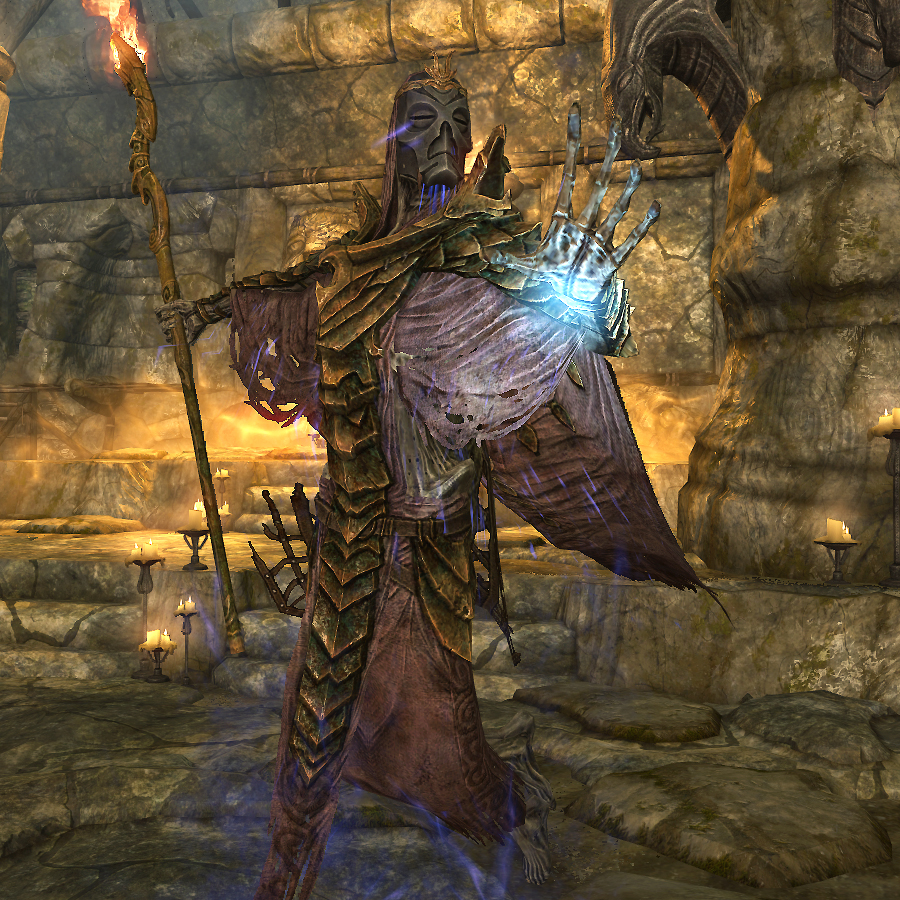
EXPLORING SKYRIM: THE DRAGON PRIESTS

I touched on that topic during my re-telling of the main quest, but here goes. Your trips through draugr ruins may end in a battle against a Dragon Priest. These priests can be a lot of trouble if you come unprepared, as they’re usually at the end of long dungeons and often have their own strategy against you.

Eight draugr ruins end with a fight against a named Dragon Priest, and each one of them carries a mask with its name. Beating all eight and picking up the masks off their cold, dead bodies will unlock a ninth. Each mask has an armor rating that can be upgraded at smithing tables, and a unique effect – so unique, you can’t destroy them at enchanting tables in order to put that effect onto other items.

Two notable examples of named Dragon Priests I’ve encountered are Rahgot, whose strategy involves swarming the room with draugr to take down the Dragonborn and their follower, and Krosis, the only one of those who doesn’t live in ruins but rather at a dragon peak, and will attack along with that peak’s dragonic resident if you choose to come too close. Then there’s Nahkriin, which must be defeated in the main quest.

I think these enemies are pretty cool! These fights can be awesome.

EXPLORING SKYRIM: DAEDRIC WISHES

Just take a look at Sanguine and tell me this isn't a
goddamn demon. I dare you.
While venturing Skyrim (or Tamriel, really), you may stumble upon a quest involving the Daedra. They’re semi-godly to godly beings, some of whom can be more closely described as demons. They’re not all bad, but many of them are. They love to mess around with the living, and the arrival of a new hero in the Dragonborn has got many of them very interested. The more powerful ones are called Daedric Princes.

A Daedric Prince’s quest may spring upon you when you least expect it. You randomly find the pieces of a short blade. You discover a sphere known as a Beacon and are asked to bring it to Meridia’s temple. While seeking a runaway dog, you find one… that talks in English, with a Brooklyn accent, in a medieval fantasy setting. You get into a drinking contest with a guy that turns out to be the Daedric Prince of debauchery in disguise, and the Dragonborn’s ensuing bender makes him run into drunken adventures across the land. You’re tasked with ending the recurring nightmares of residents of Dawnstar, which involves the Daedric Prince Vaermina in a nearby dungeon. And so on.

Meridia, one of the least bad of the lot.
Her weapon is super-destructive against the undead!

I haven’t met all of them yet, but those are examples I’ve seen. By completing these missions, you frequently get a unique equipment item out of it. Says a lot that after 150+ hours in this game, I’m still discovering stuff.

EXPLORING SKYRIM: SO MANY FACTIONS

You can’t join every faction across the land, but you can join most of them. There’s the conflict in the main quest, which sees the Greybeards and Blades at opposing ends of the dragon crisis. There’s the civil war opposing the Imperials and the Stormcloaks. However, there are several other groups to join.

There's usually more people than that.
Also, I'm standing in the fire.
First are Whiterun’s Companions, a group of brave warriors doing random lawful good acts of kindness. Oh, and some of them turn into werewolves. And you can, too! You can also become a vampire in this game.

You come close to joining the Thieves’ Guild in Riften during the main quest. Should you choose to join it, a long questline awaits. Enjoy your life of crime! (If you weren’t already living one!)

Upon your arrival in Windhelm, you can complete an orphan’s request to kill a nasty orphanage headmistress. However, the next time you go to sleep and wake up, you find yourself in a nondescript shack, forced by Astrid, leader of the Dark Brotherhood, to kill one of three morally-dubious people. The headmistress was the Brotherhood’s contract. You can follow Astrid’s orders, kill one of these people, and join the Dark Brotherhood… or, since her actual order is to kill someone in the room, you can kill her and go on a quest to destroy the Dark Brotherhood for good.

Nothing like an isolated college of magic practitioners
to feel like a youth literature protagonist.
Then there’s the College of Winterhold, which you do join during the main quest – but then it’s up to you whether you choose to follow the wizard lifestyle or not. Up in Solitude, the Bards' College might also be of interest.

In Markarth, there’s also the Forsworn, though it’s… complicated. Let’s just say you unravel a large conspiracy in there that eventually gets you sent to prison, and you can plan an escape by sort-of-joining, but you’re never really a part of that group. Which is for the better, really. The Forsworn are murderous asshats. Don't worry, you can kill them later.

You can be a member of almost every single one of these groups at the same time, contradictory beliefs be damned.

EXPLORING SKYRIM: RADIANCE

Let’s pretend that you’ve finished every big quest you could do. Well, The Elder Scrolls V is designed so that you could technically always have something to do. Aside from main quests, you can collect several smaller quests, most of which are known as “Radiant quests” (kept in the “Miscellaneous” section of your Quest journal). Those can be given to you by minor NPCs, or may be orders from Jarls and other major characters. A Jarl needs a giant killed? Bandits have taken over some mine? Perhaps the librarian of the College of Winterhold needs you to find some books for him? Does someone need a certain quantity of a particular item?

There isn’t much to say about those, really – unlike main quests, they don’t have any incidence on the plot, nor do they involve any major interactions. A few radiant quests may lead to the discovery of larger quests, however…

DUNGEONS, LICHS AND… ER… CASTLES?

Also known as "More bad guys to kill or serve".
There goes my attempt at tying the letters of DLC into anything Elder Scrolls-related. Anyhow…

I purchased the early version of Skyrim, the one that went down to 20$ when the HD re-release came out. For some reason, DLCs aren’t available for the original version anymore. The Special Edition includes all of the add-ons, as well as the related new quests, items and possibilities. This includes:

-Dawnguard: A vampire lord is trying to take down the sun itself. You can choose to join him, or fight him.

-Hearthfire: A DLC more practical than action-based, this one allows a player to buy a plot of land and build their own home just as they want it, and even hire staff! The base game actually allows for a player to marry one of several characters they may have met on their journey – with Hearthfire, it also becomes possible to adopt two orphaned children. …What, you expected a Dragonborn to do the do in a T-rated game?

I want this guy's helmet.

-Dragonborn: This one opens a brand new, sprawling questline, in which the first Dragonborn, named Miraak, wishes to reclaim his title now that dragons have made a return in the world. A new island to explore, more dungeons, more Dragon Priests, in short – a complete secondary story.

I’m actually going over these pretty quickly as I need to wrap up, also they aren’t in the game I purchased. I’d need the Special Edition for that, and after 150 hours… I don’t feel like going through the game again.

FINAL WORDS

Took me long enough, but here I am.

All the sights you'll see!
With no surprise, I’ll say that Skyrim is, for the most part, a good game. It’s by far the most expansive action RPG I’ve ever played, with more freedom in how to play one’s own character than I’ve seen in any other game before (but that may be that whenever I go for an action RPG, my choices are usually pretty basic). The huge map is a treat to discover and there are enough different environments to keep the player interested even if the color palette is a bit more in the grays, browns and whites across the world. Hundreds of NPCs have complete backstories and schedules, and tend to their things, which makes the world feel alive. You can go for scripted events, or have completely random encounters with travelers as you go! Sure, in one playthrough you’re gonna hear a thousand times the guards’ tales of taking an arrow to the knee, but hey – can’t all be perfect.

Hell, the mere fact that you have complete freedom of choice in this game is a breath of fresh air to me, the Nintendo guy, who's lived for years with games where the options were “Yes” and “You're wrong, pick Yes”.

Killing all dragons? Sure. Well, except maybe one.
The humongous number of missions is certainly welcome, along with any branching paths that may invite the player to do things differently on another playthrough, like joining the Stormcloaks instead of the Imperials, or choosing to kill Paarthurnax if you spared him before.

I will admit that I was fairly reticent to playing this game, or any Bethesda game really, in part because their unfortunate reputation for releasing games that are glitchy messes had preceded them, but also because Fallout 76 came out and destroyed whatever good faith they seemed to have left. And I had sworn to myself I wouldn’t talk about F76 here, dammit! Anyhow, while I did run into my fair share of glitches and bugs, it was never so horrendously bad that I couldn’t enjoy the game.

Of course, from time to time I would run into a weird situation (such as an NPC or item simply not appearing), wonder what to do, look up that NPC on a wiki devoted to The Elder Scrolls (UESP in particular), and either a) find out what to do in the game, or b) literally spawn them into existence near Nikhaolaas using the debug mode, accessible with the # key. It goes without saying that a normally-developed game wouldn’t require this type of effort on the player’s part. Although I do understand; a massive game such as this one, with several possible scenarios, means many ways the programming can screw up, and there ought to be some glitches Bethesda’s game testers and QAs would have missed.

I didn't run into that one, but damn,
I kinda wished I did, now.
...Maybe not so many that damn near every page of an Elder Scrolls wiki needs a “glitches” section regarding every way the game can break? Reading some of those, I feel lucky that the worst that happened to me was clipping through the ground and respawning on it seconds later. On one hand, it is true that glitches didn’t ruin my experience too much, even if I kept to playing the vanilla game. On the other hand, that’s still a buttload of glitches in there! Game crashing for no apparent reason? Yep! Stopping as I quit an alchemy table? Yep! Weird stuff happening to NPCs? Seen it. Mammoths falling from the sky? Yep. Let's just say that I completely understand why people mod the game by patching out its worst glitches.

Other critiques aside from the glitches. There’s an element of random to the game, in that a lot of loot is spawned as you find it. Generally, that’s not so bad since items found that way tend to get better as you go up in level. However, if you’re looking for something precise (such as a spellbook to learn a precious spell), good luck. Unless you build it yourself with the game’s complex and detailed crafting system, you might never find it. The random spawns also means you might become a bit of a hoarder over time, which is why owning a house to store everything becomes a necessity fairly quickly. The game is also built so that many enemies will level up with you up to a certain point, meaning there’s always a bit of a challenge even after a hundred hours.

Now, if only I could keep the crown.
The game feels fairly complete, glitches notwithstanding, and a lot of questlines seem decent. Still, the game being rushed in development for release on 11/11/2011 is perceptible from time to time. The main plot is pretty basic as far as fantasy stories go. Some elements, such as the Civil War, seemed to be a major point of focus for the game (explaining why some of them awkwardly barge into the main questline from time to time). Looking into unused game data reveals many quests that couldn’t be implemented in time that would have helped make this game feel even more lively and interesting. I’m not disappointed by what I’ve played, but it does feel at times like more could have been done.

I also felt that some skills were pretty tough to excel in. As you go up in player levels, you need to level up your skills more and more often, and some vital upgrades to particular skills happen at pretty high levels for those skills. As an example, you can’t upgrade enchanted equipment until Smithing Level 60, and creating dragon armor out of the heavy bones and scales you pick off killed dragons isn’t until Level 100. You’ll usually end up splitting the skill points gained off leveling up pretty unevenly based on the skills you feel you need, forgetting about the others. Then, most magic schoolsare pretty tough to level up if you're not playing a magic-practitioner character. And may the Gods of Tamriel help you if you choose to go Legendary on any skill…

Once again: Apologies to arachnophobes.
There are so many giant spiders in this damn game.
Last but not least, while I can praise the world map for being large, interesting ad at times simply gorgeous, I will admit that a lot of dungeons feel samey. There aren’t that many variants when it comes to dungeons, so if you’re exploring several of them like I did when I started, you quickly realize that there isn’t a ton of variety to them. Once you’ve seen two or three draugr ruins, you realize they’re all roughly the same. Most caves also feel similar. It’s a limited number of dungeon types to explore, on a map where there’s several dozens of those dungeons. It makes adventuring feel more than a bit repetitive after a while. Sure, there are rewards to be gained from this and many dungeons have their own associated mission, but when you’re exploring on your own, it may get a bit boring and tedious. Not helping this quest is that not every dungeon can be cleared, making it a hassle to remember what you visited and “cleared” when the map doesn’t always reflect it.

But yeah, all those issues put aside, I liked The Elder Scrolls V: Skyrim. I might play it some more once in a while. For all the fears I had due to it being a Bethesda game, I was pleasantly surprised! I would say I’m looking forward to playing the other Bethesda games I have, but since they’re all huge games, I doubt it’ll be anytime soon.

(Also hey, mods are always there to improve the base package...)

Next Friday: Something much shorter.